


-18%
 Kashmiri Guide I 2nd Semester (Bhat 7366)P-86
 New Kashir Zaan Khavat

₹799.00 Original price was: ₹799.00.₹655.00Current price is: ₹655.00.
1 in stock
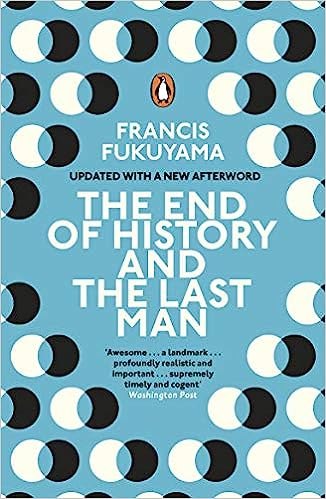
The End of History and the Last Man is a famous work of political philosophy by Francis Fukuyama, first published in 1992 by Free Press. The book grew out of his 1989 essay in The National Interest and asks a bold question: has humanity reached the End of History in the sense of a final form of government? Please message us on WhatsApp at 9906523492 for details of the copy in stock, including the edition and number of pages.
Few books of the last few decades have been quoted, argued over and misunderstood as often as this one. Whether you agree with it or not, reading it is the best way to understand a debate that still shapes how people think about democracy, power and the future.
Fukuyama argues that, after the Cold War and the collapse of the Soviet Union, liberal democracy had emerged as the only ideology with broad legitimacy. By the end of history he does not mean that events stop happening. He means the long contest between rival systems of government, such as monarchy, fascism and communism, appears to have settled in favour of liberal democracy as the most widely accepted form of political life.
The book drew strong replies from both the left and the right. Samuel Huntington answered with his idea of a clash of civilizations, and other writers pointed to religion, nationalism and tribal loyalty as forces that do not fit a simple story of progress. Fukuyama himself later accepted that democracies can go backward, and in recent years he has written about democratic decline and the rise of authoritarian models. Reading the original book alongside these debates gives a far richer picture than headlines can.
For readers in India and across the Muslim world, the book also raises useful questions. What do people want from their governments? Can dignity and justice be protected without giving up faith and tradition? How should societies with different values live alongside one another? Fukuyama writes from a Western liberal viewpoint, and part of the value of reading him is to engage critically with that viewpoint, comparing it with your own values and with other thinkers.
This is a demanding book, so read it in stages. Start with a chapter or two, write a short summary in your own words and note the points you question. Look up the thinkers mentioned, especially Hegel and Nietzsche, so that the argument is easier to follow. Then read one or two critical responses and compare them with the original. Discussing it with friends or classmates is an excellent way to sharpen your understanding. Critical reading means weighing the argument against evidence, and this book rewards that approach.
Author: Francis Fukuyama. First published: 1992 by Free Press, expanding his 1989 essay. Language: English. For the publisher, edition, year and number of pages of the copy in stock, please message us on WhatsApp at 9906523492. Same-day dispatch from Srinagar. Delivery takes about 1 day in Srinagar and 3 to 10 days across the rest of India.
Who wrote The End of History and the Last Man? Francis Fukuyama.
Did the book begin as an essay? Yes, it expands his 1989 essay in The National Interest.
Does it say that history literally ends? No. It argues that the contest between competing systems of government has largely been settled in favour of liberal democracy.
Is it suitable for exam preparation? It is a useful reading for students of politics, history and philosophy.
Can I get details of the copy in stock? Yes, please message us on WhatsApp at 9906523492.
Looking for more books like this? Browse our English Literature collection or explore all Literature & Fiction. Follow Lafz Bookstore on Instagram for new arrivals and book recommendations.
Only logged in customers who have purchased this product may leave a review.
Orders are dispatched the same day.
Prepaid orders get 5% off with coupon code PREPAID. For Cash on Delivery, please message us on WhatsApp (99065 23492).
Shipping charges, if any, are shown at checkout. If an item becomes unavailable after you order, we will let you know and refund it the way you paid.
Full details: Delivery Policy · Refund Policy
Get the Bundle featuring Reclaim Your Heart , Healing the Emptiness , and Love and Happiness . Inspirational Islamic books guiding spiritual healing, emotional growth, and fulfilment. Available now at Lafz Bookstore – your trusted source for Qurans and Islamic books online.
The End of History and the Last Man is a famous work of political philosophy by Francis Fukuyama, first published in 1992 by Free Press. The book grew out of his 1989 essay in The National Interest and asks a bold question: has humanity reached the End of History in the sense of a final form of government? Please message us on WhatsApp at 9906523492 for details of the copy in stock, including the edition and number of pages.
Few books of the last few decades have been quoted, argued over and misunderstood as often as this one. Whether you agree with it or not, reading it is the best way to understand a debate that still shapes how people think about democracy, power and the future.
Fukuyama argues that, after the Cold War and the collapse of the Soviet Union, liberal democracy had emerged as the only ideology with broad legitimacy. By the end of history he does not mean that events stop happening. He means the long contest between rival systems of government, such as monarchy, fascism and communism, appears to have settled in favour of liberal democracy as the most widely accepted form of political life.
The book drew strong replies from both the left and the right. Samuel Huntington answered with his idea of a clash of civilizations, and other writers pointed to religion, nationalism and tribal loyalty as forces that do not fit a simple story of progress. Fukuyama himself later accepted that democracies can go backward, and in recent years he has written about democratic decline and the rise of authoritarian models. Reading the original book alongside these debates gives a far richer picture than headlines can.
For readers in India and across the Muslim world, the book also raises useful questions. What do people want from their governments? Can dignity and justice be protected without giving up faith and tradition? How should societies with different values live alongside one another? Fukuyama writes from a Western liberal viewpoint, and part of the value of reading him is to engage critically with that viewpoint, comparing it with your own values and with other thinkers.
This is a demanding book, so read it in stages. Start with a chapter or two, write a short summary in your own words and note the points you question. Look up the thinkers mentioned, especially Hegel and Nietzsche, so that the argument is easier to follow. Then read one or two critical responses and compare them with the original. Discussing it with friends or classmates is an excellent way to sharpen your understanding. Critical reading means weighing the argument against evidence, and this book rewards that approach.
Author: Francis Fukuyama. First published: 1992 by Free Press, expanding his 1989 essay. Language: English. For the publisher, edition, year and number of pages of the copy in stock, please message us on WhatsApp at 9906523492. Same-day dispatch from Srinagar. Delivery takes about 1 day in Srinagar and 3 to 10 days across the rest of India.
Who wrote The End of History and the Last Man? Francis Fukuyama.
Did the book begin as an essay? Yes, it expands his 1989 essay in The National Interest.
Does it say that history literally ends? No. It argues that the contest between competing systems of government has largely been settled in favour of liberal democracy.
Is it suitable for exam preparation? It is a useful reading for students of politics, history and philosophy.
Can I get details of the copy in stock? Yes, please message us on WhatsApp at 9906523492.
Looking for more books like this? Browse our English Literature collection or explore all Literature & Fiction. Follow Lafz Bookstore on Instagram for new arrivals and book recommendations.
There are no reviews yet.
Only logged in customers who have purchased this product may leave a review.
Orders are dispatched the same day.
Prepaid orders get 5% off with coupon code PREPAID. For Cash on Delivery, please message us on WhatsApp (99065 23492).
Shipping charges, if any, are shown at checkout. If an item becomes unavailable after you order, we will let you know and refund it the way you paid.
Full details: Delivery Policy · Refund Policy
No account yet?
Create an AccountWhatsApp us

![Yasmin Mogahed Bundle [Reclaim Your Heart, Healing The Emptiness, Love & Happiness] – image 2](https://lafzbookstore.com/wp-content/uploads/2024/03/Yasmin Mogahed Bundle-2-600x600.jpg)



Reviews
There are no reviews yet.