



-14%

 Kashmiri Guide I 2nd Semester (Bhat 7366)P-86
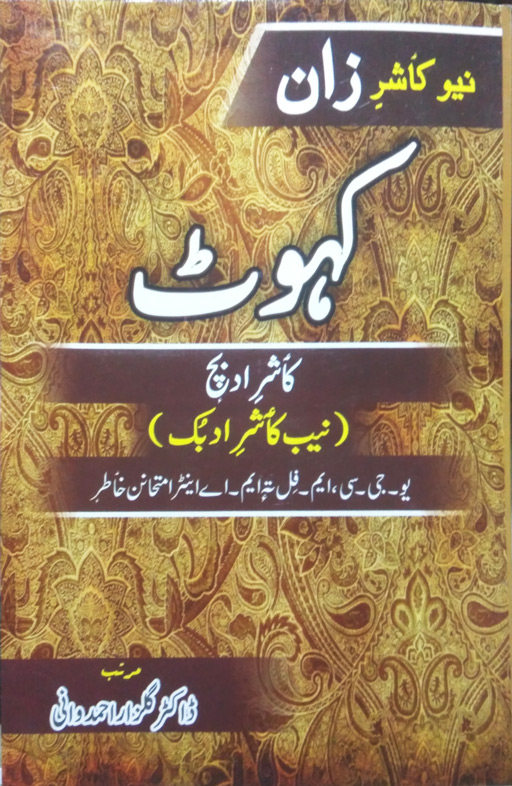 New Kashir Zaan Khavat


₹699.00 Original price was: ₹699.00.₹599.00Current price is: ₹599.00.
18 in stock
Manufacturing Consent: The Political Economy of the Mass Media by Edward S. Herman and Noam Chomsky is one of the most discussed books ever written about the news media. First published in 1988 by Pantheon Books, Manufacturing Consent sets out the authors’ “propaganda model”, an argument that the structure and economics of large, commercial media shape what becomes news and how it is framed. This listing is the Vintage paperback. For the year, page count and other details of the copy in stock, please message us on WhatsApp at 9906523492 for details of the copy in stock.
The book is widely read in journalism, mass communication, political science and media studies courses, and by general readers who want to think more carefully about the news they consume every day.
The phrase “the manufacture of consent” was used by the American writer Walter Lippmann in his 1922 book Public Opinion. Herman and Chomsky borrowed it to describe how, in their view, public agreement with the policies of powerful institutions is produced rather than simply arising on its own.
At the heart of Manufacturing Consent is the idea that news passes through a set of “filters” before it reaches the reader. In the authors’ account these are:
The authors test their model against the record of press coverage. They compare how the American media reported similar events depending on who was involved, including elections and repression in Nicaragua and El Salvador, the Soviet war in Afghanistan set against the American war in Vietnam, and the killings in Cambodia under different governments. A full chapter is given to the 1984 general election in Nicaragua. The reader does not have to agree with every conclusion to find the method instructive: put two comparable stories side by side and ask why they were treated differently.
Edward S. Herman (1925 to 2017) was an economist and media analyst who taught at the Wharton School of the University of Pennsylvania, where he became professor emeritus of finance. He wrote widely on corporate power, banking and political economy, and is regarded as the main architect of the propaganda model. Noam Chomsky is the American linguist and political writer whose work on language and on politics has made him one of the best-known intellectuals of his time. The two also worked together on other books, including The Washington Connection and Third World Fascism.
A revised edition appeared in 2002, with a new introduction that takes account of changes such as the end of the Soviet Union. The book also inspired the 1992 documentary Manufacturing Consent: Noam Chomsky and the Media, directed by Mark Achbar and Peter Wintonick.
Begin with the opening chapter that sets out the five filters, since the rest of the book applies them. Then take one case study at a time and, as you read, think of a recent story you followed and ask which of the filters might apply. Readers in Kashmir and across India will find the method useful for comparing how different outlets report the same event. Keep in mind that this is the authors’ argument, and many scholars have debated it, so reading a critique alongside it makes for a richer study.
Title: Manufacturing Consent: The Political Economy of the Mass Media. Authors: Edward S. Herman and Noam Chomsky. Publisher: Vintage. Format: paperback. Language: English. For the year, number of pages and other details of the copy in stock, please message us on WhatsApp at 9906523492. Same-day dispatch from Srinagar, with delivery in about 1 day in Srinagar and 3 to 10 days across the rest of India.
Who wrote Manufacturing Consent? Edward S. Herman and Noam Chomsky.
When was it first published? In 1988, by Pantheon Books.
What is the propaganda model? The authors’ argument that five filters, from ownership to advertising and sourcing, shape what appears in the commercial news media.
Is there a film? Yes, a 1992 documentary by Mark Achbar and Peter Wintonick.
Looking for more English books like this? Browse our English Literature collection or explore all Literature & Fiction. Follow Lafz Bookstore on Instagram for new arrivals and book recommendations.
Only logged in customers who have purchased this product may leave a review.
Orders are dispatched the same day.
Prepaid orders get 5% off with coupon code PREPAID. For Cash on Delivery, please message us on WhatsApp (99065 23492).
Shipping charges, if any, are shown at checkout. If an item becomes unavailable after you order, we will let you know and refund it the way you paid.
Full details: Delivery Policy · Refund Policy
Manufacturing Consent: The Political Economy of the Mass Media by Edward S. Herman and Noam Chomsky is one of the most discussed books ever written about the news media. First published in 1988 by Pantheon Books, Manufacturing Consent sets out the authors’ “propaganda model”, an argument that the structure and economics of large, commercial media shape what becomes news and how it is framed. This listing is the Vintage paperback. For the year, page count and other details of the copy in stock, please message us on WhatsApp at 9906523492 for details of the copy in stock.
The book is widely read in journalism, mass communication, political science and media studies courses, and by general readers who want to think more carefully about the news they consume every day.
The phrase “the manufacture of consent” was used by the American writer Walter Lippmann in his 1922 book Public Opinion. Herman and Chomsky borrowed it to describe how, in their view, public agreement with the policies of powerful institutions is produced rather than simply arising on its own.
At the heart of Manufacturing Consent is the idea that news passes through a set of “filters” before it reaches the reader. In the authors’ account these are:
The authors test their model against the record of press coverage. They compare how the American media reported similar events depending on who was involved, including elections and repression in Nicaragua and El Salvador, the Soviet war in Afghanistan set against the American war in Vietnam, and the killings in Cambodia under different governments. A full chapter is given to the 1984 general election in Nicaragua. The reader does not have to agree with every conclusion to find the method instructive: put two comparable stories side by side and ask why they were treated differently.
Edward S. Herman (1925 to 2017) was an economist and media analyst who taught at the Wharton School of the University of Pennsylvania, where he became professor emeritus of finance. He wrote widely on corporate power, banking and political economy, and is regarded as the main architect of the propaganda model. Noam Chomsky is the American linguist and political writer whose work on language and on politics has made him one of the best-known intellectuals of his time. The two also worked together on other books, including The Washington Connection and Third World Fascism.
A revised edition appeared in 2002, with a new introduction that takes account of changes such as the end of the Soviet Union. The book also inspired the 1992 documentary Manufacturing Consent: Noam Chomsky and the Media, directed by Mark Achbar and Peter Wintonick.
Begin with the opening chapter that sets out the five filters, since the rest of the book applies them. Then take one case study at a time and, as you read, think of a recent story you followed and ask which of the filters might apply. Readers in Kashmir and across India will find the method useful for comparing how different outlets report the same event. Keep in mind that this is the authors’ argument, and many scholars have debated it, so reading a critique alongside it makes for a richer study.
Title: Manufacturing Consent: The Political Economy of the Mass Media. Authors: Edward S. Herman and Noam Chomsky. Publisher: Vintage. Format: paperback. Language: English. For the year, number of pages and other details of the copy in stock, please message us on WhatsApp at 9906523492. Same-day dispatch from Srinagar, with delivery in about 1 day in Srinagar and 3 to 10 days across the rest of India.
Who wrote Manufacturing Consent? Edward S. Herman and Noam Chomsky.
When was it first published? In 1988, by Pantheon Books.
What is the propaganda model? The authors’ argument that five filters, from ownership to advertising and sourcing, shape what appears in the commercial news media.
Is there a film? Yes, a 1992 documentary by Mark Achbar and Peter Wintonick.
Looking for more English books like this? Browse our English Literature collection or explore all Literature & Fiction. Follow Lafz Bookstore on Instagram for new arrivals and book recommendations.
There are no reviews yet.
Only logged in customers who have purchased this product may leave a review.
Orders are dispatched the same day.
Prepaid orders get 5% off with coupon code PREPAID. For Cash on Delivery, please message us on WhatsApp (99065 23492).
Shipping charges, if any, are shown at checkout. If an item becomes unavailable after you order, we will let you know and refund it the way you paid.
Full details: Delivery Policy · Refund Policy
No account yet?
Create an Account 18 in stock
Tell us the name and we’ll hunt it down for you. We reply instantly on WhatsApp.
Ask on WhatsAppOpens WhatsApp with your message ready. Just hit send.
WhatsApp us





Reviews
There are no reviews yet.