




-5%

Book details
- Author: David Rogers
- Publisher: Mcgraw Hill
- Format: Paperback
- Edition: Latest
 Kashmiri Guide I 2nd Semester (Bhat 7366)P-86
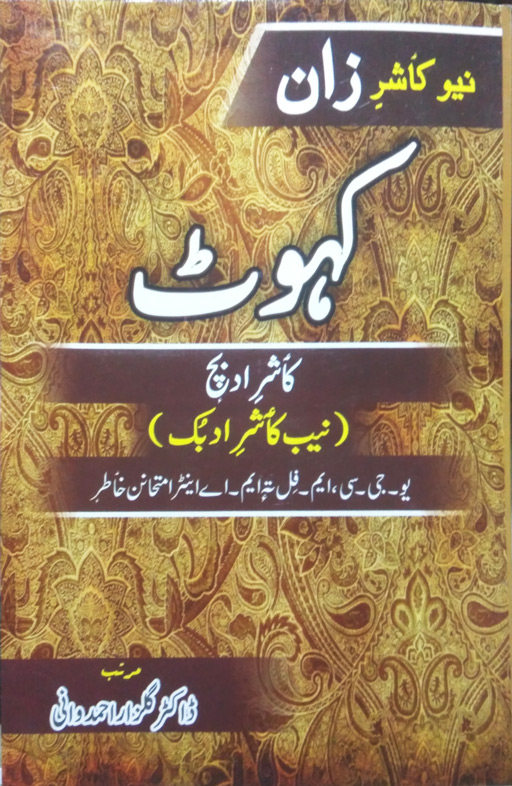 New Kashir Zaan Khavat


₹885.00 Original price was: ₹885.00.₹845.00Current price is: ₹845.00.5% off
10 in stock
 Procedural Elements For Computer Graphics₹845This book
 Data And Computer Communications 9th edition₹835Added with it
Procedural Elements for Computer Graphics by David F. Rogers is a well-known McGraw-Hill textbook on the algorithms behind computer graphics. The listing describes it as a broad treatment of the subject for senior undergraduate or first-year graduate courses, with an emphasis on rendering and in-depth coverage of classical algorithms. This copy is a paperback, and we ship it from Srinagar the same day. Please message us on WhatsApp at 9906523492 for details of the copy in stock, including the edition and year.
Every image on a screen, from a simple line to a lit three-dimensional scene, is produced by a chain of procedures. This book focuses on those procedures: how a computer decides which pixels to colour, how hidden surfaces are removed, and how shading and curves are handled.
David F. Rogers wrote the book, and it is published by McGraw-Hill. A library catalogue record shows that the title first appeared in 1985 with bibliographies and an index, and the book has long been used in graphics courses. The edition we hold is the latest edition on our listing, so please check the details with us before you order if you need a specific one.
Learning graphics algorithms from a description alone is hard. When an algorithm is written as pseudocode, a student can translate it into C, C++, Java or Python and see it run. Worked examples show the numbers moving through each step, which makes it far easier to find mistakes in your own code. The illustrations help you picture what the algorithm is doing to the image.
We describe the book in general terms and do not claim that it matches any particular university syllabus. Please compare the contents with your course outline before ordering.
Read a section once for the idea, then reread with pen and paper and work through the example by hand. Next, implement the algorithm in a language you know and compare your output with the book. Start with the simplest programs, such as drawing a line or filling a shape, before moving to hidden surfaces and shading. Keep every program in a folder with short notes on what you learned. Attempt the programming projects, since they turn passive reading into real skill. When your result looks wrong, print intermediate values and compare them with the worked example.
Lafz Bookstore, based in Srinagar, supplies college, engineering, school, exam and Kashmir books across India. Same-day dispatch, careful packing and WhatsApp support mean you can ask about the copy before you buy. Carts above the free shipping limit ship free, and prepaid orders get a discount with the coupon shown on the store.
Title: Procedural Elements for Computer Graphics. Author: David F. Rogers. Publisher: McGraw-Hill. Format: paperback. Language: English. For the edition, year and number of pages of the copy in stock, please message us on WhatsApp at 9906523492. Same-day dispatch from Srinagar. Delivery takes about 1 day in Srinagar and 3 to 10 days across the rest of India.
Who wrote Procedural Elements for Computer Graphics? David F. Rogers, published by McGraw-Hill.
Does it include code? It includes detailed pseudocode for many algorithms and programming projects.
Who is it for? Senior undergraduate and first-year graduate students, as well as programmers, engineers and scientists.
How quickly will it arrive? We dispatch the same day. Delivery is about 1 day in Srinagar and 3 to 10 days across India.
Looking for more college books like this? Browse all Higher Education books. Follow Lafz Bookstore on Instagram for new arrivals and book recommendations.
| Author | |
|---|---|
| Publisher | |
| Language |
Only logged in customers who have purchased this product may leave a review.
Orders are dispatched the same day.
Prepaid orders get 5% off with coupon code PREPAID. For Cash on Delivery, please message us on WhatsApp (99065 23492).
Shipping charges, if any, are shown at checkout. If an item becomes unavailable after you order, we will let you know and refund it the way you paid.
Full details: Delivery Policy · Refund Policy
Procedural Elements for Computer Graphics by David F. Rogers is a well-known McGraw-Hill textbook on the algorithms behind computer graphics. The listing describes it as a broad treatment of the subject for senior undergraduate or first-year graduate courses, with an emphasis on rendering and in-depth coverage of classical algorithms. This copy is a paperback, and we ship it from Srinagar the same day. Please message us on WhatsApp at 9906523492 for details of the copy in stock, including the edition and year.
Every image on a screen, from a simple line to a lit three-dimensional scene, is produced by a chain of procedures. This book focuses on those procedures: how a computer decides which pixels to colour, how hidden surfaces are removed, and how shading and curves are handled.
David F. Rogers wrote the book, and it is published by McGraw-Hill. A library catalogue record shows that the title first appeared in 1985 with bibliographies and an index, and the book has long been used in graphics courses. The edition we hold is the latest edition on our listing, so please check the details with us before you order if you need a specific one.
Learning graphics algorithms from a description alone is hard. When an algorithm is written as pseudocode, a student can translate it into C, C++, Java or Python and see it run. Worked examples show the numbers moving through each step, which makes it far easier to find mistakes in your own code. The illustrations help you picture what the algorithm is doing to the image.
We describe the book in general terms and do not claim that it matches any particular university syllabus. Please compare the contents with your course outline before ordering.
Read a section once for the idea, then reread with pen and paper and work through the example by hand. Next, implement the algorithm in a language you know and compare your output with the book. Start with the simplest programs, such as drawing a line or filling a shape, before moving to hidden surfaces and shading. Keep every program in a folder with short notes on what you learned. Attempt the programming projects, since they turn passive reading into real skill. When your result looks wrong, print intermediate values and compare them with the worked example.
Lafz Bookstore, based in Srinagar, supplies college, engineering, school, exam and Kashmir books across India. Same-day dispatch, careful packing and WhatsApp support mean you can ask about the copy before you buy. Carts above the free shipping limit ship free, and prepaid orders get a discount with the coupon shown on the store.
Title: Procedural Elements for Computer Graphics. Author: David F. Rogers. Publisher: McGraw-Hill. Format: paperback. Language: English. For the edition, year and number of pages of the copy in stock, please message us on WhatsApp at 9906523492. Same-day dispatch from Srinagar. Delivery takes about 1 day in Srinagar and 3 to 10 days across the rest of India.
Who wrote Procedural Elements for Computer Graphics? David F. Rogers, published by McGraw-Hill.
Does it include code? It includes detailed pseudocode for many algorithms and programming projects.
Who is it for? Senior undergraduate and first-year graduate students, as well as programmers, engineers and scientists.
How quickly will it arrive? We dispatch the same day. Delivery is about 1 day in Srinagar and 3 to 10 days across India.
Looking for more college books like this? Browse all Higher Education books. Follow Lafz Bookstore on Instagram for new arrivals and book recommendations.
| Author | |
|---|---|
| Publisher | |
| Language |
There are no reviews yet.
Only logged in customers who have purchased this product may leave a review.
Orders are dispatched the same day.
Prepaid orders get 5% off with coupon code PREPAID. For Cash on Delivery, please message us on WhatsApp (99065 23492).
Shipping charges, if any, are shown at checkout. If an item becomes unavailable after you order, we will let you know and refund it the way you paid.
Full details: Delivery Policy · Refund Policy
No account yet?
Create an Account
10 in stock
Procedural Elements For Computer Graphics₹845This bookData And Computer Communications 9th edition₹835Added with itTell us the name and we’ll hunt it down for you. We reply instantly on WhatsApp.
Ask on WhatsAppOpens WhatsApp with your message ready. Just hit send.
WhatsApp us


Reviews
There are no reviews yet.