



-40%
 Kashmiri Guide I 2nd Semester (Bhat 7366)P-86
 New Kashir Zaan Khavat
₹250.00 Original price was: ₹250.00.₹150.00Current price is: ₹150.00.
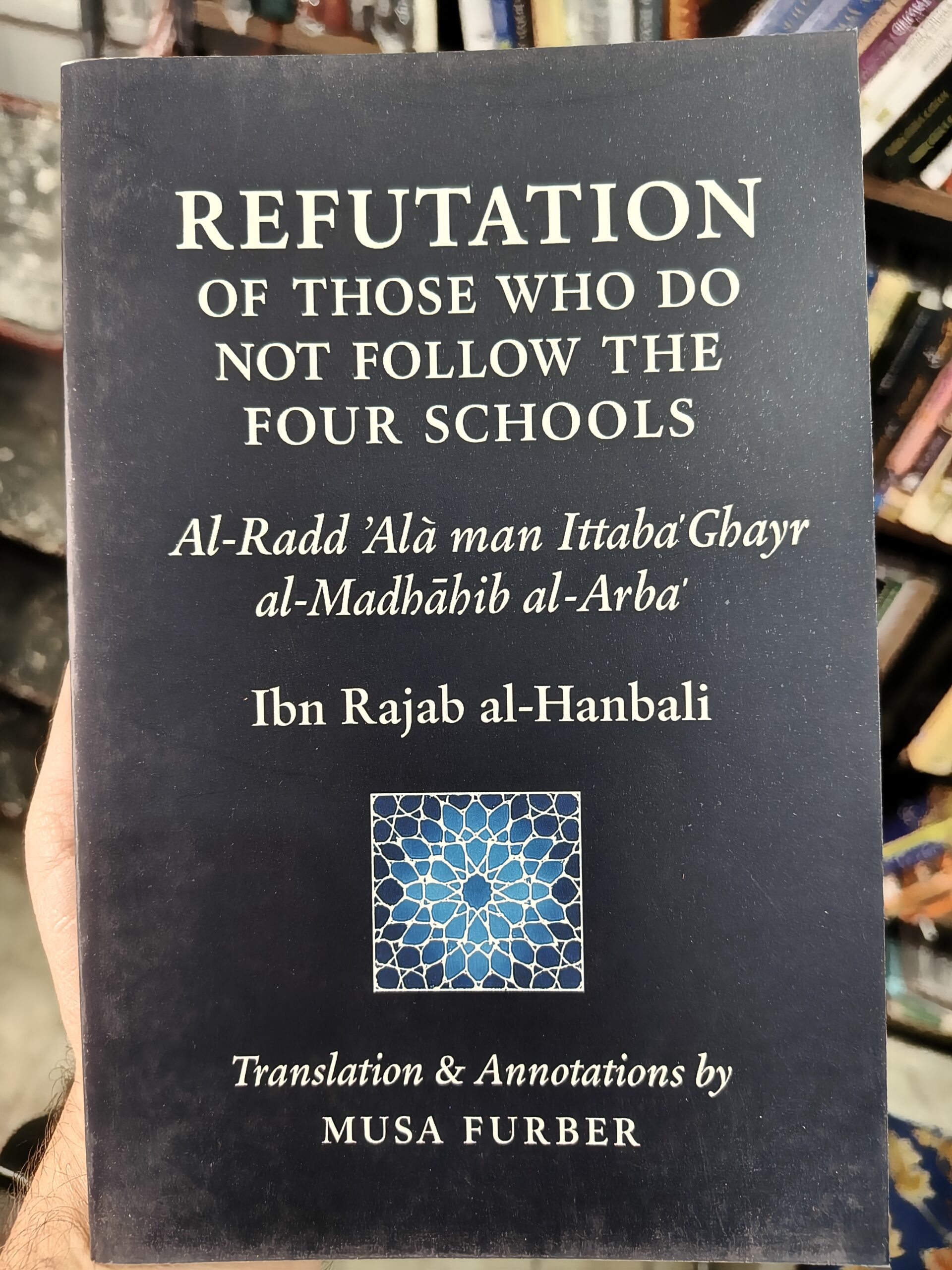
Refutation of those who do not follow the four schools, by Imam Ibn Rajab (RH), in English. Buy online in India at Lafz Bookstore.
2 in stock
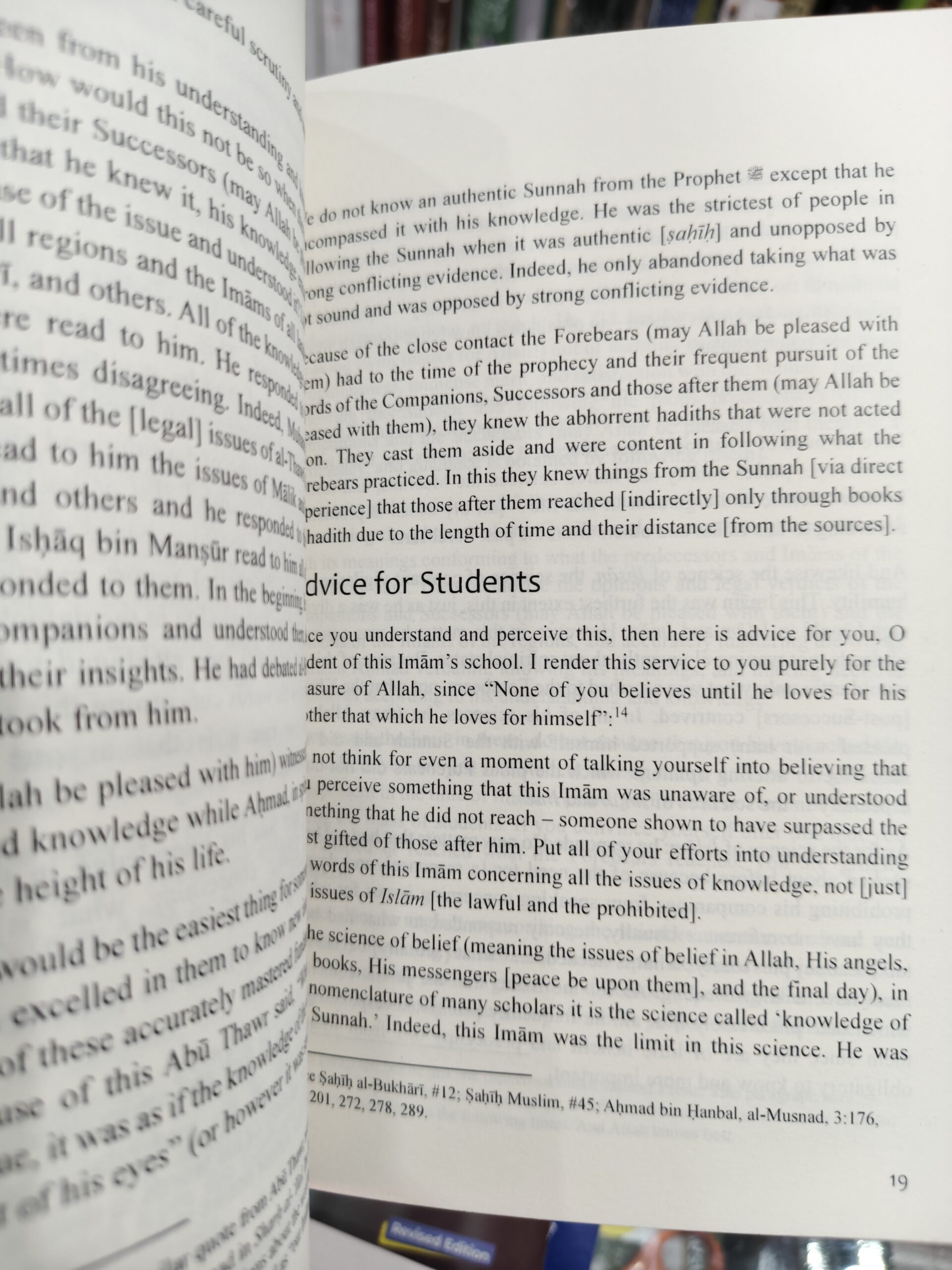
Refutation of Those Who Do Not Follow the Four Schools is a short essay by Ibn Rajab al-Hanbali. Its Arabic title is Al-Radd ‘ala man ittaba’ ghayr al-madhahib al-arba’a. This English edition was translated and edited by Musa Furber and published by Islamosaic. It runs to about 34 pages, so it is a very short work that can be read in a single sitting.
The essay urges Muslims to hold to established scholarship, especially in matters of law. It speaks to people who saw themselves as independent of the classical scholars and who read and reinterpreted the texts without having been trained to do so. It also traces how the Muslim community came to recognise certain scholars as authorities to be followed.
Zayn al-Din Abd al-Rahman ibn Ahmad, known as Ibn Rajab, lived from 736 to 795 AH, which is about 1335 to 1393 CE, and he spent his life in Damascus. He was a Hanbali jurist, a scholar of hadith, a historian and a preacher. His other works include Jami’ al-‘Ulum wa’l-Hikam, his commentary on forty hadith, Lata’if al-Ma’arif, Fath al-Bari, his commentary on Sahih al-Bukhari which was left incomplete, and al-Dhayl ‘ala Tabaqat al-Hanabila, a continuation of the biographical record of Hanbali scholars.
The question of how an ordinary Muslim should relate to the great scholars and the schools of law is an old one, and it is discussed again in every generation. Muslims today meet it when they ask who they should turn to for a ruling, how far they may read the texts for themselves, and what the history of the schools tells us. A short classical essay gives the reader the argument as one respected scholar made it, in his own words, without the noise of modern debate. Readers will have their own views on the subject, and scholars have differed over it. Reading the essay lets a person understand one carefully stated position and the reasoning behind it.
Students of fiqh, those who attend classes on the schools of law, teachers preparing a lesson on the history of the madhhabs, and readers who want to understand the classical view of following scholars will find it useful. It is also helpful for anyone who has heard the terms taqlid and madhhab and would like to see how a classical scholar used them.
Read the whole essay once without stopping. Then go back and write down the main steps of the argument in your own words. Look up any unfamiliar terms and ask a teacher about points that are unclear. Because the topic is one on which scholars have held different views, it is wise to read other works as well and to discuss them with people of knowledge, keeping courtesy and fairness towards those who differ. The aim of study is to know Allah’s religion better and to act on it with humility.
This essay is brief, so it makes a good companion to a longer book on the principles of fiqh or on the history of the schools. It may also be given to a student who is beginning a course of legal studies, or shared among members of a study circle who wish to discuss one text together. It is a presentation of the author’s view and should be read as such, alongside the writings of other scholars.
One benefit of reading an essay like this is the picture it gives of how knowledge was passed on in the Muslim community. Scholars studied under teachers, teachers had their own teachers, and the chain of learning reached back across the generations. The essay invites the reader to think about the role of such chains, the training needed to derive rulings from the texts, and the humility that goes with learning. Whatever view a reader finally holds, the history of how the schools developed is well worth knowing, and Ibn Rajab was a historian as well as a jurist, so he writes with that history in mind.
English translation and edition by Musa Furber, published by Islamosaic, about 34 pages. Editions and printings may vary, so please message us on WhatsApp at 9906523492 for details of the copy in stock. Same-day dispatch from Srinagar.
Who translated this edition? Musa Furber translated and edited it, and Islamosaic published it.
Is it a long book? No, it is a short essay of about 34 pages.
Who was Ibn Rajab? He was a Hanbali jurist, hadith scholar, historian and preacher of Damascus who lived from 736 to 795 AH.
Looking for more books like this? Browse our Creed & Fiqh collection or explore all Islamic Books. Follow Lafz Bookstore on Instagram for new arrivals and book recommendations.
| Author | |
|---|---|
| Publisher |
Only logged in customers who have purchased this product may leave a review.
Orders are dispatched the same day.
Prepaid orders get 5% off with coupon code PREPAID. For Cash on Delivery, please message us on WhatsApp (99065 23492).
Shipping charges, if any, are shown at checkout. If an item becomes unavailable after you order, we will let you know and refund it the way you paid.
Full details: Delivery Policy · Refund Policy
Get the Bundle featuring Reclaim Your Heart , Healing the Emptiness , and Love and Happiness . Inspirational Islamic books guiding spiritual healing, emotional growth, and fulfilment. Available now at Lafz Bookstore – your trusted source for Qurans and Islamic books online.
Refutation of Those Who Do Not Follow the Four Schools is a short essay by Ibn Rajab al-Hanbali. Its Arabic title is Al-Radd ‘ala man ittaba’ ghayr al-madhahib al-arba’a. This English edition was translated and edited by Musa Furber and published by Islamosaic. It runs to about 34 pages, so it is a very short work that can be read in a single sitting.
The essay urges Muslims to hold to established scholarship, especially in matters of law. It speaks to people who saw themselves as independent of the classical scholars and who read and reinterpreted the texts without having been trained to do so. It also traces how the Muslim community came to recognise certain scholars as authorities to be followed.
Zayn al-Din Abd al-Rahman ibn Ahmad, known as Ibn Rajab, lived from 736 to 795 AH, which is about 1335 to 1393 CE, and he spent his life in Damascus. He was a Hanbali jurist, a scholar of hadith, a historian and a preacher. His other works include Jami’ al-‘Ulum wa’l-Hikam, his commentary on forty hadith, Lata’if al-Ma’arif, Fath al-Bari, his commentary on Sahih al-Bukhari which was left incomplete, and al-Dhayl ‘ala Tabaqat al-Hanabila, a continuation of the biographical record of Hanbali scholars.
The question of how an ordinary Muslim should relate to the great scholars and the schools of law is an old one, and it is discussed again in every generation. Muslims today meet it when they ask who they should turn to for a ruling, how far they may read the texts for themselves, and what the history of the schools tells us. A short classical essay gives the reader the argument as one respected scholar made it, in his own words, without the noise of modern debate. Readers will have their own views on the subject, and scholars have differed over it. Reading the essay lets a person understand one carefully stated position and the reasoning behind it.
Students of fiqh, those who attend classes on the schools of law, teachers preparing a lesson on the history of the madhhabs, and readers who want to understand the classical view of following scholars will find it useful. It is also helpful for anyone who has heard the terms taqlid and madhhab and would like to see how a classical scholar used them.
Read the whole essay once without stopping. Then go back and write down the main steps of the argument in your own words. Look up any unfamiliar terms and ask a teacher about points that are unclear. Because the topic is one on which scholars have held different views, it is wise to read other works as well and to discuss them with people of knowledge, keeping courtesy and fairness towards those who differ. The aim of study is to know Allah’s religion better and to act on it with humility.
This essay is brief, so it makes a good companion to a longer book on the principles of fiqh or on the history of the schools. It may also be given to a student who is beginning a course of legal studies, or shared among members of a study circle who wish to discuss one text together. It is a presentation of the author’s view and should be read as such, alongside the writings of other scholars.
One benefit of reading an essay like this is the picture it gives of how knowledge was passed on in the Muslim community. Scholars studied under teachers, teachers had their own teachers, and the chain of learning reached back across the generations. The essay invites the reader to think about the role of such chains, the training needed to derive rulings from the texts, and the humility that goes with learning. Whatever view a reader finally holds, the history of how the schools developed is well worth knowing, and Ibn Rajab was a historian as well as a jurist, so he writes with that history in mind.
English translation and edition by Musa Furber, published by Islamosaic, about 34 pages. Editions and printings may vary, so please message us on WhatsApp at 9906523492 for details of the copy in stock. Same-day dispatch from Srinagar.
Who translated this edition? Musa Furber translated and edited it, and Islamosaic published it.
Is it a long book? No, it is a short essay of about 34 pages.
Who was Ibn Rajab? He was a Hanbali jurist, hadith scholar, historian and preacher of Damascus who lived from 736 to 795 AH.
Looking for more books like this? Browse our Creed & Fiqh collection or explore all Islamic Books. Follow Lafz Bookstore on Instagram for new arrivals and book recommendations.
| Author | |
|---|---|
| Publisher |
There are no reviews yet.
Only logged in customers who have purchased this product may leave a review.
Orders are dispatched the same day.
Prepaid orders get 5% off with coupon code PREPAID. For Cash on Delivery, please message us on WhatsApp (99065 23492).
Shipping charges, if any, are shown at checkout. If an item becomes unavailable after you order, we will let you know and refund it the way you paid.
Full details: Delivery Policy · Refund Policy
No account yet?
Create an AccountWhatsApp us


 Allah Loves-600x952.jpg)





Reviews
There are no reviews yet.