



-17%

 Kashmiri Guide I 2nd Semester (Bhat 7366)P-86
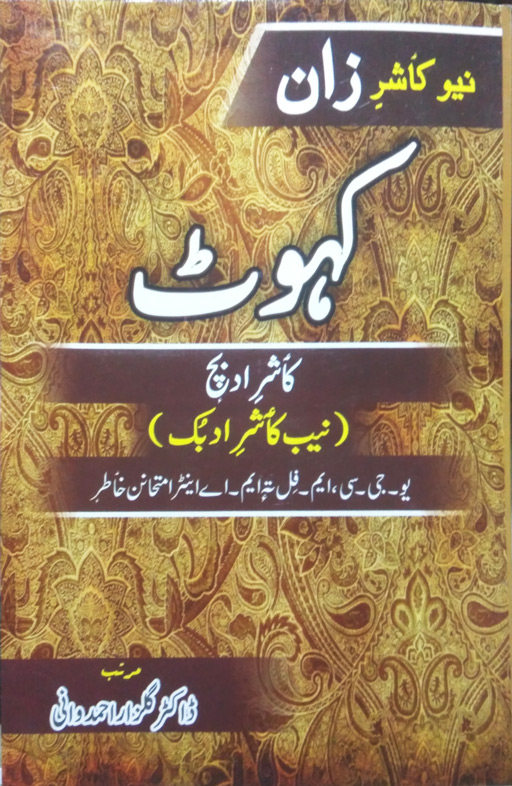 New Kashir Zaan Khavat


₹599.00 Original price was: ₹599.00.₹499.00Current price is: ₹499.00.
9 in stock
A Fate Written on Matchboxes: State-Building in Kashmir Under India is a scholarly history by Hafsa Kanjwal, a Kashmiri historian who teaches history at Lafayette College. The book looks at how the Indian state tightened its hold on Jammu and Kashmir in the years after 1953, and it explains the title through a vivid image: jobs and favours in the valley were famously said to be decided by a few words scribbled on a matchbox. For readers who want to understand modern Kashmir, A Fate Written on Matchboxes is one of the most talked-about academic books of recent years. For details of the copy in stock, please message us on WhatsApp at 9906523492 for details of the copy in stock.
Most writing on Kashmir’s early years focuses on Sheikh Abdullah. This book shifts attention to the man who took charge after his arrest in 1953, Bakshi Ghulam Mohammed, who led the government for about a decade until 1963. Kanjwal argues that his rule was central to making Indian control in Kashmir stable. Rather than winning consent through open democratic politics, the state relied on employment, patronage, development funds and basic services, while discussion of self-determination was pushed aside. The author calls this approach a politics of life.
The book draws on a varied mix of material: official and bureaucratic records, propaganda, memoirs, literary sources and oral histories. This range lets the author describe not only the decisions of those in power but also how ordinary Kashmiris lived through these years. Reviewers have noted that the book challenges triumphant accounts of Indian democracy in the region and shows that harsh methods of rule in Kashmir have a longer history than many readers realise.
To understand why Kashmir remains in the news, it helps to look at how its present arrangements were first put together. This work takes the reader back to the decade in which institutions, loyalties and resentments were formed. It does not treat Kashmiris only as people who were governed; it also listens to their stories, memories and writing. As a result it gives students and general readers a framework for thinking about governance, identity and memory in a contested region.
This is a work of academic history written for general readers, so take it chapter by chapter. Keep a notebook for names, dates and terms, since several figures appear again and again. Read the introduction twice, once at the start and once after you finish the book, because the central argument is easier to appreciate after you have followed the evidence. If you are studying the subject for a course, compare the book with other histories of the period and notice where they agree and where they differ. Approach it with an open mind and a willingness to question familiar stories.
Author: Hafsa Kanjwal. Publisher: Navayana Publishing, 2023. Format: paperback, 384 pages, in English. For the exact edition and condition of the copy in stock, please message us on WhatsApp at 9906523492. Same-day dispatch from Srinagar. Delivery takes about 1 day in Srinagar and 3 to 10 days across the rest of India.
Who wrote A Fate Written on Matchboxes? Hafsa Kanjwal, a historian who teaches at Lafayette College.
Which period does it cover? It centres on the years of Bakshi Ghulam Mohammed’s government, from 1953 to 1963, and the aftermath that followed.
Why is it called A Fate Written on Matchboxes? The title refers to the way employment and favours were said to be arranged through brief notes written on matchboxes.
Is it a novel? No. It is a work of history and political analysis based on archival research.
How can I get details of the copy in stock? Please message us on WhatsApp at 9906523492.
Looking for more books like this? Browse our English Literature collection or explore all Literature & Fiction. Follow Lafz Bookstore on Instagram for new arrivals and book recommendations.
Only logged in customers who have purchased this product may leave a review.
Orders are dispatched the same day.
Prepaid orders get 5% off with coupon code PREPAID. For Cash on Delivery, please message us on WhatsApp (99065 23492).
Shipping charges, if any, are shown at checkout. If an item becomes unavailable after you order, we will let you know and refund it the way you paid.
Full details: Delivery Policy · Refund Policy
Get the Bundle featuring Reclaim Your Heart , Healing the Emptiness , and Love and Happiness . Inspirational Islamic books guiding spiritual healing, emotional growth, and fulfilment. Available now at Lafz Bookstore – your trusted source for Qurans and Islamic books online.
A Fate Written on Matchboxes: State-Building in Kashmir Under India is a scholarly history by Hafsa Kanjwal, a Kashmiri historian who teaches history at Lafayette College. The book looks at how the Indian state tightened its hold on Jammu and Kashmir in the years after 1953, and it explains the title through a vivid image: jobs and favours in the valley were famously said to be decided by a few words scribbled on a matchbox. For readers who want to understand modern Kashmir, A Fate Written on Matchboxes is one of the most talked-about academic books of recent years. For details of the copy in stock, please message us on WhatsApp at 9906523492 for details of the copy in stock.
Most writing on Kashmir’s early years focuses on Sheikh Abdullah. This book shifts attention to the man who took charge after his arrest in 1953, Bakshi Ghulam Mohammed, who led the government for about a decade until 1963. Kanjwal argues that his rule was central to making Indian control in Kashmir stable. Rather than winning consent through open democratic politics, the state relied on employment, patronage, development funds and basic services, while discussion of self-determination was pushed aside. The author calls this approach a politics of life.
The book draws on a varied mix of material: official and bureaucratic records, propaganda, memoirs, literary sources and oral histories. This range lets the author describe not only the decisions of those in power but also how ordinary Kashmiris lived through these years. Reviewers have noted that the book challenges triumphant accounts of Indian democracy in the region and shows that harsh methods of rule in Kashmir have a longer history than many readers realise.
To understand why Kashmir remains in the news, it helps to look at how its present arrangements were first put together. This work takes the reader back to the decade in which institutions, loyalties and resentments were formed. It does not treat Kashmiris only as people who were governed; it also listens to their stories, memories and writing. As a result it gives students and general readers a framework for thinking about governance, identity and memory in a contested region.
This is a work of academic history written for general readers, so take it chapter by chapter. Keep a notebook for names, dates and terms, since several figures appear again and again. Read the introduction twice, once at the start and once after you finish the book, because the central argument is easier to appreciate after you have followed the evidence. If you are studying the subject for a course, compare the book with other histories of the period and notice where they agree and where they differ. Approach it with an open mind and a willingness to question familiar stories.
Author: Hafsa Kanjwal. Publisher: Navayana Publishing, 2023. Format: paperback, 384 pages, in English. For the exact edition and condition of the copy in stock, please message us on WhatsApp at 9906523492. Same-day dispatch from Srinagar. Delivery takes about 1 day in Srinagar and 3 to 10 days across the rest of India.
Who wrote A Fate Written on Matchboxes? Hafsa Kanjwal, a historian who teaches at Lafayette College.
Which period does it cover? It centres on the years of Bakshi Ghulam Mohammed’s government, from 1953 to 1963, and the aftermath that followed.
Why is it called A Fate Written on Matchboxes? The title refers to the way employment and favours were said to be arranged through brief notes written on matchboxes.
Is it a novel? No. It is a work of history and political analysis based on archival research.
How can I get details of the copy in stock? Please message us on WhatsApp at 9906523492.
Looking for more books like this? Browse our English Literature collection or explore all Literature & Fiction. Follow Lafz Bookstore on Instagram for new arrivals and book recommendations.
There are no reviews yet.
Only logged in customers who have purchased this product may leave a review.
Orders are dispatched the same day.
Prepaid orders get 5% off with coupon code PREPAID. For Cash on Delivery, please message us on WhatsApp (99065 23492).
Shipping charges, if any, are shown at checkout. If an item becomes unavailable after you order, we will let you know and refund it the way you paid.
Full details: Delivery Policy · Refund Policy
No account yet?
Create an AccountWhatsApp us







Reviews
There are no reviews yet.