




-5%

 Kashmiri Guide I 2nd Semester (Bhat 7366)P-86
 New Kashir Zaan Khavat


₹840.00 Original price was: ₹840.00.₹799.00Current price is: ₹799.00.5% off
10 in stock
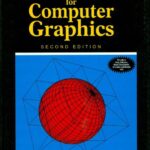
Mathematical Elements for Computer Graphics is a well-known textbook by David F. Rogers and J. Alan Adams, published by McGraw Hill. If you are looking for a book that explains the mathematics hidden behind every picture on a computer screen, Mathematical Elements for Computer Graphics is one of the classic titles in the field. It is available at Lafz Bookstore in Srinagar and ships across India. Please message us on WhatsApp at 9906523492 for details of the copy in stock, including the edition and year.
The book is written for students of computer graphics and computer-aided design, especially in computer science and in mechanical and aeronautical engineering. It treats the subject in a unified way, so that transformations, projections, curves and surfaces are seen as parts of one connected mathematical story rather than as separate tricks.
Every game, animation, medical scan viewer and engineering drawing depends on a small set of mathematical ideas. A rotation on screen is a matrix multiplication. A smooth curve on a car body or an aircraft wing is described by a carefully chosen mathematical formula. Students who learn only to call a graphics library often get stuck the moment something behaves unexpectedly. Students who understand the mathematics can find the reason and fix it.
Mathematical Elements for Computer Graphics builds exactly this understanding. It starts with transformations, the foundation of everything else, and gradually moves towards the more advanced topic of curves and surfaces. This order helps a reader grow in confidence with each chapter.
The book assumes that you are comfortable with vector and matrix algebra and basic calculus. If these topics feel rusty, revise them first for a week or two. Time spent on matrices will repay itself many times, because almost every chapter uses them.
Read each chapter with a notebook beside you and work through the small examples by hand. Then try the end-of-book problems and the programming projects. Writing even a short program that rotates a shape or draws a curve will teach you more than rereading the page. Learn the matrix form of each transformation, and try to explain in your own words why it works. Revise the chapter on transformations again before starting curves and surfaces, since later chapters rely on it. If you study alongside a course, use this book as a companion to your class notes and check any syllabus-specific requirement with your teacher.
The subject of this book, the mathematical theory behind graphics, does not go out of date quickly. Matrices, projections and splines are still the working tools of graphics programmers, animators and design engineers. For that reason, a student who keeps this book on the shelf after the course can return to it during projects, interviews or later study.
Authors: David F. Rogers and J. Alan Adams. Publisher: McGraw Hill. Format: paperback. Language: English. For the year, edition and other details of the copy in stock, please message us on WhatsApp at 9906523492. Same-day dispatch from Srinagar. Delivery takes about 1 day in Srinagar and 3 to 10 days across the rest of India.
Who wrote Mathematical Elements for Computer Graphics? It was written by David F. Rogers and J. Alan Adams.
Who publishes it? McGraw Hill.
What background do I need? A working knowledge of vector and matrix algebra and calculus.
Does it cover curves and surfaces? Yes, it has chapters on plane curves, space curves and surface description and generation, including B-splines.
How quickly will it reach me? We dispatch the same day from Srinagar. Delivery is about 1 day in Srinagar and 3 to 10 days in the rest of India.
Looking for more college books like this? Browse all Higher Education books. Follow Lafz Bookstore on Instagram for new arrivals and book recommendations.
| Author | |
|---|---|
| Publisher | |
| Language |
Only logged in customers who have purchased this product may leave a review.
Orders are dispatched the same day.
Prepaid orders get 5% off with coupon code PREPAID. For Cash on Delivery, please message us on WhatsApp (99065 23492).
Shipping charges, if any, are shown at checkout. If an item becomes unavailable after you order, we will let you know and refund it the way you paid.
Full details: Delivery Policy · Refund Policy
Mathematical Elements for Computer Graphics is a well-known textbook by David F. Rogers and J. Alan Adams, published by McGraw Hill. If you are looking for a book that explains the mathematics hidden behind every picture on a computer screen, Mathematical Elements for Computer Graphics is one of the classic titles in the field. It is available at Lafz Bookstore in Srinagar and ships across India. Please message us on WhatsApp at 9906523492 for details of the copy in stock, including the edition and year.
The book is written for students of computer graphics and computer-aided design, especially in computer science and in mechanical and aeronautical engineering. It treats the subject in a unified way, so that transformations, projections, curves and surfaces are seen as parts of one connected mathematical story rather than as separate tricks.
Every game, animation, medical scan viewer and engineering drawing depends on a small set of mathematical ideas. A rotation on screen is a matrix multiplication. A smooth curve on a car body or an aircraft wing is described by a carefully chosen mathematical formula. Students who learn only to call a graphics library often get stuck the moment something behaves unexpectedly. Students who understand the mathematics can find the reason and fix it.
Mathematical Elements for Computer Graphics builds exactly this understanding. It starts with transformations, the foundation of everything else, and gradually moves towards the more advanced topic of curves and surfaces. This order helps a reader grow in confidence with each chapter.
The book assumes that you are comfortable with vector and matrix algebra and basic calculus. If these topics feel rusty, revise them first for a week or two. Time spent on matrices will repay itself many times, because almost every chapter uses them.
Read each chapter with a notebook beside you and work through the small examples by hand. Then try the end-of-book problems and the programming projects. Writing even a short program that rotates a shape or draws a curve will teach you more than rereading the page. Learn the matrix form of each transformation, and try to explain in your own words why it works. Revise the chapter on transformations again before starting curves and surfaces, since later chapters rely on it. If you study alongside a course, use this book as a companion to your class notes and check any syllabus-specific requirement with your teacher.
The subject of this book, the mathematical theory behind graphics, does not go out of date quickly. Matrices, projections and splines are still the working tools of graphics programmers, animators and design engineers. For that reason, a student who keeps this book on the shelf after the course can return to it during projects, interviews or later study.
Authors: David F. Rogers and J. Alan Adams. Publisher: McGraw Hill. Format: paperback. Language: English. For the year, edition and other details of the copy in stock, please message us on WhatsApp at 9906523492. Same-day dispatch from Srinagar. Delivery takes about 1 day in Srinagar and 3 to 10 days across the rest of India.
Who wrote Mathematical Elements for Computer Graphics? It was written by David F. Rogers and J. Alan Adams.
Who publishes it? McGraw Hill.
What background do I need? A working knowledge of vector and matrix algebra and calculus.
Does it cover curves and surfaces? Yes, it has chapters on plane curves, space curves and surface description and generation, including B-splines.
How quickly will it reach me? We dispatch the same day from Srinagar. Delivery is about 1 day in Srinagar and 3 to 10 days in the rest of India.
Looking for more college books like this? Browse all Higher Education books. Follow Lafz Bookstore on Instagram for new arrivals and book recommendations.
| Author | |
|---|---|
| Publisher | |
| Language |
There are no reviews yet.
Only logged in customers who have purchased this product may leave a review.
Orders are dispatched the same day.
Prepaid orders get 5% off with coupon code PREPAID. For Cash on Delivery, please message us on WhatsApp (99065 23492).
Shipping charges, if any, are shown at checkout. If an item becomes unavailable after you order, we will let you know and refund it the way you paid.
Full details: Delivery Policy · Refund Policy
No account yet?
Create an Account
10 in stock
Tell us the name and we’ll hunt it down for you. We reply instantly on WhatsApp.
Ask on WhatsAppOpens WhatsApp with your message ready. Just hit send.
WhatsApp us


Reviews
There are no reviews yet.