



-34%


 Kashmiri Guide I 2nd Semester (Bhat 7366)P-86
 New Kashir Zaan Khavat

₹990.00 Original price was: ₹990.00.₹650.00Current price is: ₹650.00.
3 in stock
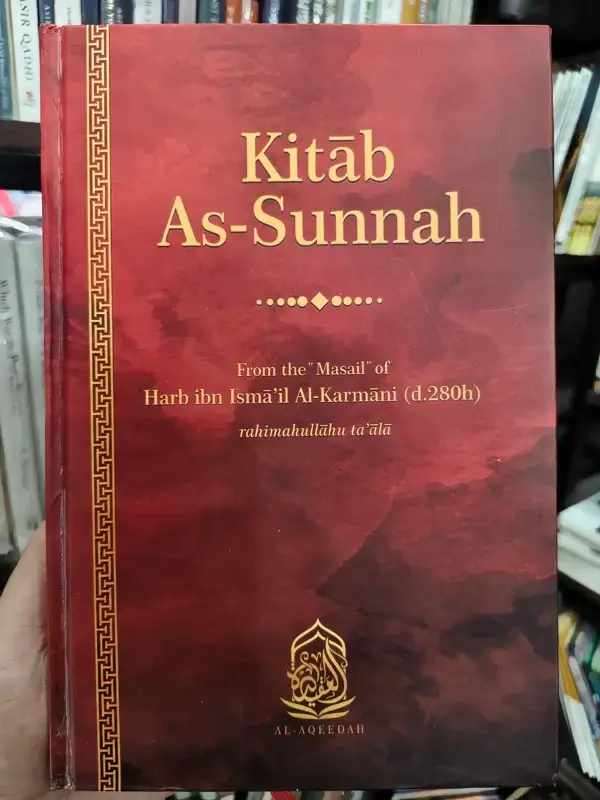
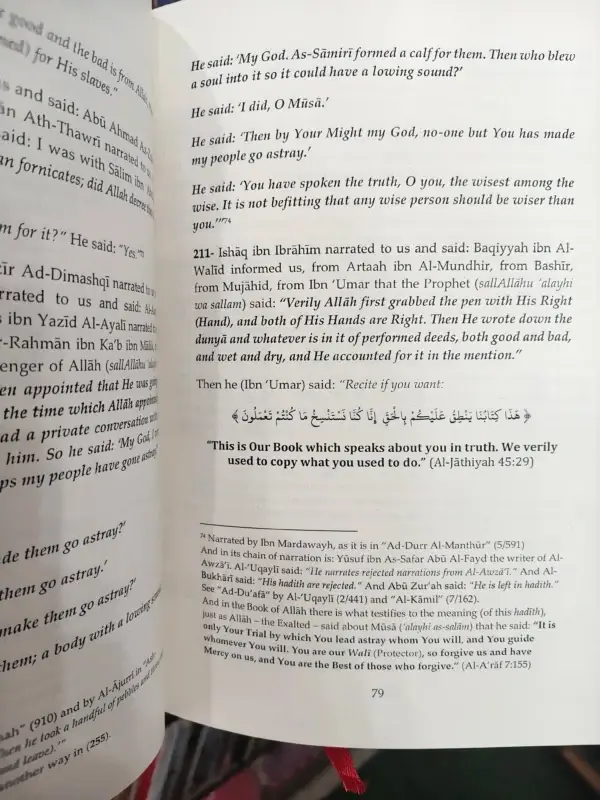
Kitab as-Sunnah in this English edition is a major early work on creed compiled by Abdullah ibn Ahmad ibn Hanbal, who died in 290 AH. He narrates from his father, Imam Ahmad ibn Hanbal, and the book gathers his father’s narrations together with other reports on matters of belief. It is important to be clear about this: the book is not written by Imam Ahmad himself. It is the work of his son, Abdullah, recording what he heard and collected. The Al-Aqeedah edition was translated into English by Abu Hajar and runs to about 541 pages.
Please also note that this is a different book from the Kitab as-Sunnah of Harb al-Kirmani. The two share a title, as several early works on the Sunnah do, but they are separate books by separate authors.
Abdullah ibn Ahmad ibn Hanbal was the son of Imam Ahmad ibn Hanbal and one of the main narrators of his father’s teaching. Imam Ahmad lived from about 780 to 855 CE in Baghdad and is remembered for standing firm in the Mihna, the trial in which scholars were pressed to accept a doctrine about the Qur’an. His son preserved much of what he heard from him, and this book is one of the results.
Narrations from the early scholars show how creed was taught before it was written into long systematic works. In Kitab as-Sunnah the reader meets the discussions as they were recorded: short reports, sayings and answers, set out with their chains of narration. This gives a direct view of the early debates and of the way the author’s circle answered them. Students who wish to understand the history of creed in the first centuries will find it a valuable primary text.
This is a larger book, suited to students of ‘aqidah, readers of the Hanbali tradition, and those who study early Islamic thought. A newcomer to the subject may first read a shorter introduction to creed and then return to this work. Study with a teacher is recommended.
Plan to read a small section each day, so that the reports can be absorbed. Make note of the topic of each chapter and the names of the narrators. Compare the reports with the verses of the Qur’an and the authentic hadith they refer to. When a passage deals with a debate you do not know, ask a teacher to explain the background instead of passing over it. Keep the aim sincere: to know Allah and His Messenger ﷺ better.
This book answers groups who disagreed with the author’s school, and it does so in the language of its time. Today’s reader should approach it with calm and fairness, and should remember that the aim of studying creed is to strengthen faith and to hold to the truth with good manners. Scholars have differed on many questions, and a respectful tone towards other Muslims is a duty in every discussion.
Al-Aqeedah edition, English, translated by Abu Hajar, about 541 pages. Printings can differ, so please message us on WhatsApp at 9906523492 for details of the copy in stock. Same-day dispatch from Srinagar.
Is this written by Imam Ahmad? No. It is compiled by his son, Abdullah ibn Ahmad ibn Hanbal, narrating from his father and others.
Is it the same as Harb al-Kirmani’s Kitab as-Sunnah? No, that is a different book by a different author.
Who translated it? Abu Hajar, in the Al-Aqeedah edition.
Looking for more books like this? Browse our Creed & Fiqh collection or explore all Islamic Books. Follow Lafz Bookstore on Instagram for new arrivals and book recommendations.
Only logged in customers who have purchased this product may leave a review.
Orders are dispatched the same day.
Prepaid orders get 5% off with coupon code PREPAID. For Cash on Delivery, please message us on WhatsApp (99065 23492).
Shipping charges, if any, are shown at checkout. If an item becomes unavailable after you order, we will let you know and refund it the way you paid.
Full details: Delivery Policy · Refund Policy
Kitab as-Sunnah in this English edition is a major early work on creed compiled by Abdullah ibn Ahmad ibn Hanbal, who died in 290 AH. He narrates from his father, Imam Ahmad ibn Hanbal, and the book gathers his father’s narrations together with other reports on matters of belief. It is important to be clear about this: the book is not written by Imam Ahmad himself. It is the work of his son, Abdullah, recording what he heard and collected. The Al-Aqeedah edition was translated into English by Abu Hajar and runs to about 541 pages.
Please also note that this is a different book from the Kitab as-Sunnah of Harb al-Kirmani. The two share a title, as several early works on the Sunnah do, but they are separate books by separate authors.
Abdullah ibn Ahmad ibn Hanbal was the son of Imam Ahmad ibn Hanbal and one of the main narrators of his father’s teaching. Imam Ahmad lived from about 780 to 855 CE in Baghdad and is remembered for standing firm in the Mihna, the trial in which scholars were pressed to accept a doctrine about the Qur’an. His son preserved much of what he heard from him, and this book is one of the results.
Narrations from the early scholars show how creed was taught before it was written into long systematic works. In Kitab as-Sunnah the reader meets the discussions as they were recorded: short reports, sayings and answers, set out with their chains of narration. This gives a direct view of the early debates and of the way the author’s circle answered them. Students who wish to understand the history of creed in the first centuries will find it a valuable primary text.
This is a larger book, suited to students of ‘aqidah, readers of the Hanbali tradition, and those who study early Islamic thought. A newcomer to the subject may first read a shorter introduction to creed and then return to this work. Study with a teacher is recommended.
Plan to read a small section each day, so that the reports can be absorbed. Make note of the topic of each chapter and the names of the narrators. Compare the reports with the verses of the Qur’an and the authentic hadith they refer to. When a passage deals with a debate you do not know, ask a teacher to explain the background instead of passing over it. Keep the aim sincere: to know Allah and His Messenger ﷺ better.
This book answers groups who disagreed with the author’s school, and it does so in the language of its time. Today’s reader should approach it with calm and fairness, and should remember that the aim of studying creed is to strengthen faith and to hold to the truth with good manners. Scholars have differed on many questions, and a respectful tone towards other Muslims is a duty in every discussion.
Al-Aqeedah edition, English, translated by Abu Hajar, about 541 pages. Printings can differ, so please message us on WhatsApp at 9906523492 for details of the copy in stock. Same-day dispatch from Srinagar.
Is this written by Imam Ahmad? No. It is compiled by his son, Abdullah ibn Ahmad ibn Hanbal, narrating from his father and others.
Is it the same as Harb al-Kirmani’s Kitab as-Sunnah? No, that is a different book by a different author.
Who translated it? Abu Hajar, in the Al-Aqeedah edition.
Looking for more books like this? Browse our Creed & Fiqh collection or explore all Islamic Books. Follow Lafz Bookstore on Instagram for new arrivals and book recommendations.
There are no reviews yet.
Only logged in customers who have purchased this product may leave a review.
Orders are dispatched the same day.
Prepaid orders get 5% off with coupon code PREPAID. For Cash on Delivery, please message us on WhatsApp (99065 23492).
Shipping charges, if any, are shown at checkout. If an item becomes unavailable after you order, we will let you know and refund it the way you paid.
Full details: Delivery Policy · Refund Policy
No account yet?
Create an AccountWhatsApp us



Reviews
There are no reviews yet.