



-7%
 Kashmiri Guide I 2nd Semester (Bhat 7366)P-86
 New Kashir Zaan Khavat


₹695.00 Original price was: ₹695.00.₹649.00Current price is: ₹649.00.
10 in stock
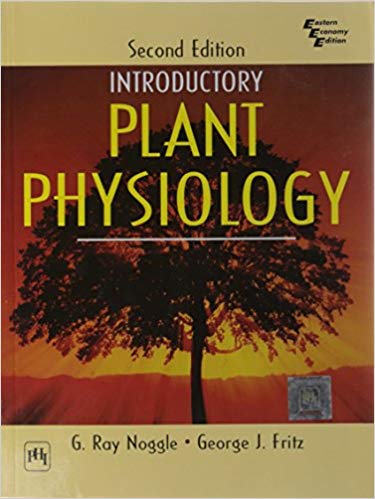
Introductory Plant Physiology by G. Ray Noggle and George J. Fritz, published in this edition by PHI, is a textbook on how higher green plants live, grow and function. If you are looking for Introductory Plant Physiology with a focus on the whole plant and its uses in agriculture, forestry and horticulture, this paperback is a solid choice. For the edition, year and number of pages of the copy in stock, please message us on WhatsApp at 9906523492 for details of the copy in stock.
Plant physiology asks how a plant takes in water and minerals, makes food from sunlight, moves substances from one part to another, grows, flowers and responds to its surroundings. This book treats these questions with an emphasis on the plant as a whole organism, which is the way farmers, foresters and gardeners actually meet plants.
Every meal on our tables begins with a plant. Understanding how crops capture energy, use water, absorb nutrients and cope with heat, cold, drought or poor soil is central to producing food for a growing population. In Kashmir and the wider Himalayan region, where orchards, paddy, saffron and vegetable farming support many families, this knowledge has direct practical value. A student of botany or agriculture who understands plant physiology can better explain why a crop fails, how it can be improved and how yields can be made more reliable.
The book also reaches into modern laboratory methods, such as tissue culture and genetic engineering, showing how fundamental physiology provides the base on which newer biotechnology is built.
The publisher’s description notes that the book calls for a background in plant science and chemistry, so it suits readers who have already studied the basics of both subjects.
Begin with the opening chapters on plant organization and chemical composition, because the later topics depend on them. As you move through each process, draw a simple flow diagram: where the raw materials enter, what happens inside the plant and what the products are. Revise the chemistry behind each process, such as the role of water, minerals and light energy, since many students find the reasoning easier to follow once the chemistry is clear. Use the electron micrographs to connect the structures you read about with what is actually seen under the microscope.
Make a short note for each topic that answers three questions: what happens, why it matters to the plant, and how it affects a crop. These notes give you a fast revision sheet before tests and viva sessions.
Lafz Bookstore is based in Srinagar and keeps one of the largest online collections of school, college and Kashmir books. We pack every order with care and dispatch it the same day, so that you can start your semester with the right books.
Title: Introductory Plant Physiology. Authors: G. Ray Noggle and George J. Fritz. Publisher: PHI. Format: paperback. Subject: plant physiology and botany. For the edition, year and number of pages of the copy in stock, please message us on WhatsApp at 9906523492 for details of the copy in stock. Same-day dispatch from Srinagar. Delivery takes about 1 day in Srinagar and 3 to 10 days across the rest of India.
Who are the authors? The authors are G. Ray Noggle and George J. Fritz.
What is the main focus of the book? It focuses on the physiology of higher green plants, particularly at the whole plant level, with uses in forestry, agronomy and horticulture.
Does it mention biotechnology? Yes, it discusses advances in cell and tissue culture, protoplast manipulation and genetic engineering.
What background is needed? A background in plant science and chemistry is expected.
How quickly will it reach me? We dispatch the same day from Srinagar. Delivery is about 1 day in Srinagar and 3 to 10 days in the rest of India.
Looking for more college books like this? Browse all Higher Education books. Follow Lafz Bookstore on Instagram for new arrivals and book recommendations.
| Author | |
|---|---|
| Publisher | |
| Language |
Only logged in customers who have purchased this product may leave a review.
Orders are dispatched the same day.
Prepaid orders get 5% off with coupon code PREPAID. For Cash on Delivery, please message us on WhatsApp (99065 23492).
Shipping charges, if any, are shown at checkout. If an item becomes unavailable after you order, we will let you know and refund it the way you paid.
Full details: Delivery Policy · Refund Policy
Introductory Plant Physiology by G. Ray Noggle and George J. Fritz, published in this edition by PHI, is a textbook on how higher green plants live, grow and function. If you are looking for Introductory Plant Physiology with a focus on the whole plant and its uses in agriculture, forestry and horticulture, this paperback is a solid choice. For the edition, year and number of pages of the copy in stock, please message us on WhatsApp at 9906523492 for details of the copy in stock.
Plant physiology asks how a plant takes in water and minerals, makes food from sunlight, moves substances from one part to another, grows, flowers and responds to its surroundings. This book treats these questions with an emphasis on the plant as a whole organism, which is the way farmers, foresters and gardeners actually meet plants.
Every meal on our tables begins with a plant. Understanding how crops capture energy, use water, absorb nutrients and cope with heat, cold, drought or poor soil is central to producing food for a growing population. In Kashmir and the wider Himalayan region, where orchards, paddy, saffron and vegetable farming support many families, this knowledge has direct practical value. A student of botany or agriculture who understands plant physiology can better explain why a crop fails, how it can be improved and how yields can be made more reliable.
The book also reaches into modern laboratory methods, such as tissue culture and genetic engineering, showing how fundamental physiology provides the base on which newer biotechnology is built.
The publisher’s description notes that the book calls for a background in plant science and chemistry, so it suits readers who have already studied the basics of both subjects.
Begin with the opening chapters on plant organization and chemical composition, because the later topics depend on them. As you move through each process, draw a simple flow diagram: where the raw materials enter, what happens inside the plant and what the products are. Revise the chemistry behind each process, such as the role of water, minerals and light energy, since many students find the reasoning easier to follow once the chemistry is clear. Use the electron micrographs to connect the structures you read about with what is actually seen under the microscope.
Make a short note for each topic that answers three questions: what happens, why it matters to the plant, and how it affects a crop. These notes give you a fast revision sheet before tests and viva sessions.
Lafz Bookstore is based in Srinagar and keeps one of the largest online collections of school, college and Kashmir books. We pack every order with care and dispatch it the same day, so that you can start your semester with the right books.
Title: Introductory Plant Physiology. Authors: G. Ray Noggle and George J. Fritz. Publisher: PHI. Format: paperback. Subject: plant physiology and botany. For the edition, year and number of pages of the copy in stock, please message us on WhatsApp at 9906523492 for details of the copy in stock. Same-day dispatch from Srinagar. Delivery takes about 1 day in Srinagar and 3 to 10 days across the rest of India.
Who are the authors? The authors are G. Ray Noggle and George J. Fritz.
What is the main focus of the book? It focuses on the physiology of higher green plants, particularly at the whole plant level, with uses in forestry, agronomy and horticulture.
Does it mention biotechnology? Yes, it discusses advances in cell and tissue culture, protoplast manipulation and genetic engineering.
What background is needed? A background in plant science and chemistry is expected.
How quickly will it reach me? We dispatch the same day from Srinagar. Delivery is about 1 day in Srinagar and 3 to 10 days in the rest of India.
Looking for more college books like this? Browse all Higher Education books. Follow Lafz Bookstore on Instagram for new arrivals and book recommendations.
| Author | |
|---|---|
| Publisher | |
| Language |
There are no reviews yet.
Only logged in customers who have purchased this product may leave a review.
Orders are dispatched the same day.
Prepaid orders get 5% off with coupon code PREPAID. For Cash on Delivery, please message us on WhatsApp (99065 23492).
Shipping charges, if any, are shown at checkout. If an item becomes unavailable after you order, we will let you know and refund it the way you paid.
Full details: Delivery Policy · Refund Policy
No account yet?
Create an AccountTell us the name and we’ll hunt it down for you. We reply instantly on WhatsApp.
Ask on WhatsAppOpens WhatsApp with your message ready. Just hit send.
WhatsApp us


Reviews
There are no reviews yet.