



-3%Sold out
 Kashmiri Guide I 2nd Semester (Bhat 7366)P-86
 New Kashir Zaan Khavat


₹295.00 Original price was: ₹295.00.₹285.00Current price is: ₹285.00.
Author | Publisher | Genre | Cover | Edition | Vipul Singh |Macmillan | History | Paperback | Latest
Out of stock
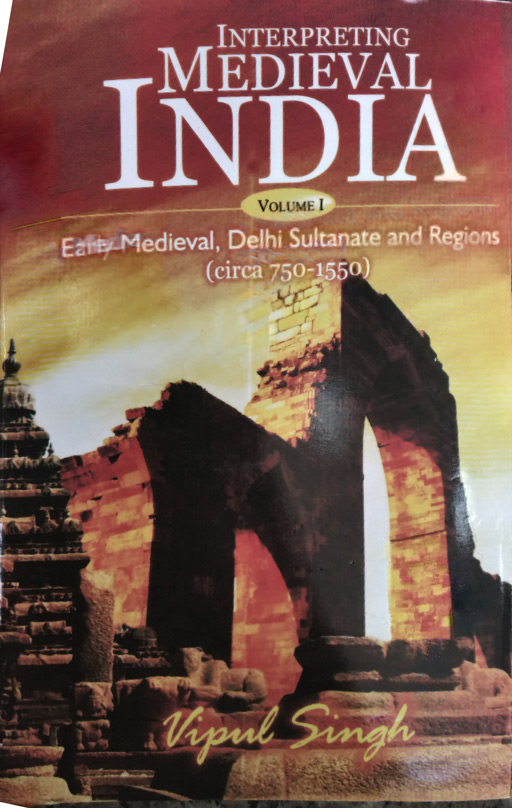
Interpreting Medieval India Vol 1 is the first volume of a history series on India between roughly 750 and 1550, covering the early medieval period, the Delhi Sultanate and the regional kingdoms, and anyone searching for interpreting medieval india as a university text will find it a useful companion. It is written by Vipul Singh and is the kind of book history students are often asked to read for undergraduate and postgraduate courses. Please message us on WhatsApp at 9906523492 for details of the copy in stock, including the publisher and number of pages.
The period it covers is a long and complicated one. It stretches from the centuries after the classical age, through the rise of regional powers, to the establishment and growth of the Delhi Sultanate. Rather than reading it as a single story of one dynasty after another, this book tries to show how historians interpret these centuries.
Lafz Bookstore stocks it for students, teachers and general readers of Indian history.
The title tells us something about the approach. The word interpreting signals that this is not only a list of dates and names. It asks how we know what we know, which sources historians use and why they sometimes disagree. That is helpful for students who must write essays rather than only memorise facts.
We do not want to claim more than we can verify about the chapter-by-chapter contents. For the exact edition, publisher and number of pages, please check with us on WhatsApp.
Vipul Singh is the author named on this series. We are not able to verify further details of his biography to our satisfaction, so we prefer not to guess. If you would like to know more about the author and the series, message us and we will help.
What we can say is that the book is positioned as a major step towards a fresh, source-aware view of the medieval Indian past, presented across a volume dedicated to the years 750 to 1550.
Medieval Indian history is a standard part of many history syllabi, and having a book that explains how the period is interpreted is a real advantage when preparing answers.
It is also valuable for general readers. Many of us grew up with a simplified picture of medieval India. A text that brings together the early medieval, the Sultanate and the regions invites a more careful and balanced understanding.
Because the subject touches religion and identity, a measured, source-based approach matters. A good textbook gives readers the evidence and lets them think.
Read with a map beside you, since regions and distances matter. Make a simple timeline for 750 to 1550 and add events as you read. Keep notes on different historians’ views, which makes exam answers and essays much stronger.
After finishing a chapter, try to write three lines on the main argument. If you cannot, reread. Over time, your notes on interpreting medieval india will become your own revision guide.
History is not only a record of events but an argument about what they mean. Two historians may use the same sources and arrive at different conclusions, depending on the questions they ask. A volume that sets out to interpret a period teaches the reader to look for those questions.
For example, when reading about the Delhi Sultanate, ask what kinds of sources survive, who wrote them and for whom. When reading about regions, ask how local developments fit or do not fit the larger picture. These habits will help in exams and in any later research.
Which period does Volume 1 cover?
According to the subtitle, it covers the early medieval period, the Delhi Sultanate and regions, from around 750 to 1550.
Is there a Volume 2?
The title indicates it is the first volume of a series. Message us on WhatsApp at 9906523492 to ask about other volumes.
Looking for more books like this? Browse our Literature & Fiction collection or explore all all books. Follow Lafz Bookstore on Instagram for new arrivals and book recommendations.
Only logged in customers who have purchased this product may leave a review.
Orders are dispatched the same day.
Prepaid orders get 5% off with coupon code PREPAID. For Cash on Delivery, please message us on WhatsApp (99065 23492).
Shipping charges, if any, are shown at checkout. If an item becomes unavailable after you order, we will let you know and refund it the way you paid.
Full details: Delivery Policy · Refund Policy
Interpreting Medieval India Vol 1 is the first volume of a history series on India between roughly 750 and 1550, covering the early medieval period, the Delhi Sultanate and the regional kingdoms, and anyone searching for interpreting medieval india as a university text will find it a useful companion. It is written by Vipul Singh and is the kind of book history students are often asked to read for undergraduate and postgraduate courses. Please message us on WhatsApp at 9906523492 for details of the copy in stock, including the publisher and number of pages.
The period it covers is a long and complicated one. It stretches from the centuries after the classical age, through the rise of regional powers, to the establishment and growth of the Delhi Sultanate. Rather than reading it as a single story of one dynasty after another, this book tries to show how historians interpret these centuries.
Lafz Bookstore stocks it for students, teachers and general readers of Indian history.
The title tells us something about the approach. The word interpreting signals that this is not only a list of dates and names. It asks how we know what we know, which sources historians use and why they sometimes disagree. That is helpful for students who must write essays rather than only memorise facts.
We do not want to claim more than we can verify about the chapter-by-chapter contents. For the exact edition, publisher and number of pages, please check with us on WhatsApp.
Vipul Singh is the author named on this series. We are not able to verify further details of his biography to our satisfaction, so we prefer not to guess. If you would like to know more about the author and the series, message us and we will help.
What we can say is that the book is positioned as a major step towards a fresh, source-aware view of the medieval Indian past, presented across a volume dedicated to the years 750 to 1550.
Medieval Indian history is a standard part of many history syllabi, and having a book that explains how the period is interpreted is a real advantage when preparing answers.
It is also valuable for general readers. Many of us grew up with a simplified picture of medieval India. A text that brings together the early medieval, the Sultanate and the regions invites a more careful and balanced understanding.
Because the subject touches religion and identity, a measured, source-based approach matters. A good textbook gives readers the evidence and lets them think.
Read with a map beside you, since regions and distances matter. Make a simple timeline for 750 to 1550 and add events as you read. Keep notes on different historians’ views, which makes exam answers and essays much stronger.
After finishing a chapter, try to write three lines on the main argument. If you cannot, reread. Over time, your notes on interpreting medieval india will become your own revision guide.
History is not only a record of events but an argument about what they mean. Two historians may use the same sources and arrive at different conclusions, depending on the questions they ask. A volume that sets out to interpret a period teaches the reader to look for those questions.
For example, when reading about the Delhi Sultanate, ask what kinds of sources survive, who wrote them and for whom. When reading about regions, ask how local developments fit or do not fit the larger picture. These habits will help in exams and in any later research.
Which period does Volume 1 cover?
According to the subtitle, it covers the early medieval period, the Delhi Sultanate and regions, from around 750 to 1550.
Is there a Volume 2?
The title indicates it is the first volume of a series. Message us on WhatsApp at 9906523492 to ask about other volumes.
Looking for more books like this? Browse our Literature & Fiction collection or explore all all books. Follow Lafz Bookstore on Instagram for new arrivals and book recommendations.
There are no reviews yet.
Only logged in customers who have purchased this product may leave a review.
Orders are dispatched the same day.
Prepaid orders get 5% off with coupon code PREPAID. For Cash on Delivery, please message us on WhatsApp (99065 23492).
Shipping charges, if any, are shown at checkout. If an item becomes unavailable after you order, we will let you know and refund it the way you paid.
Full details: Delivery Policy · Refund Policy
No account yet?
Create an AccountWhatsApp us




Reviews
There are no reviews yet.