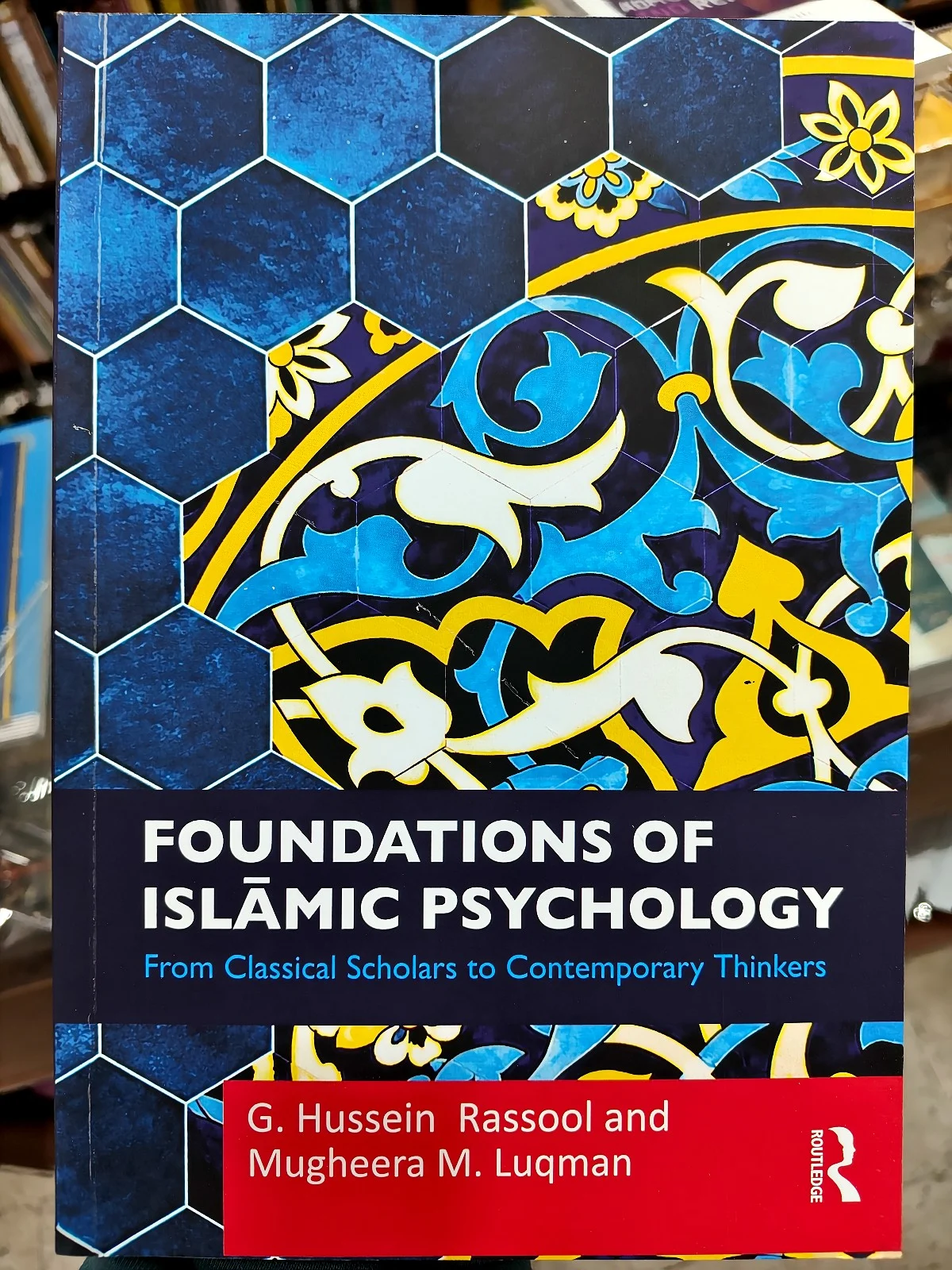
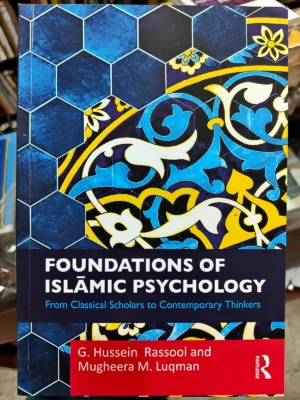
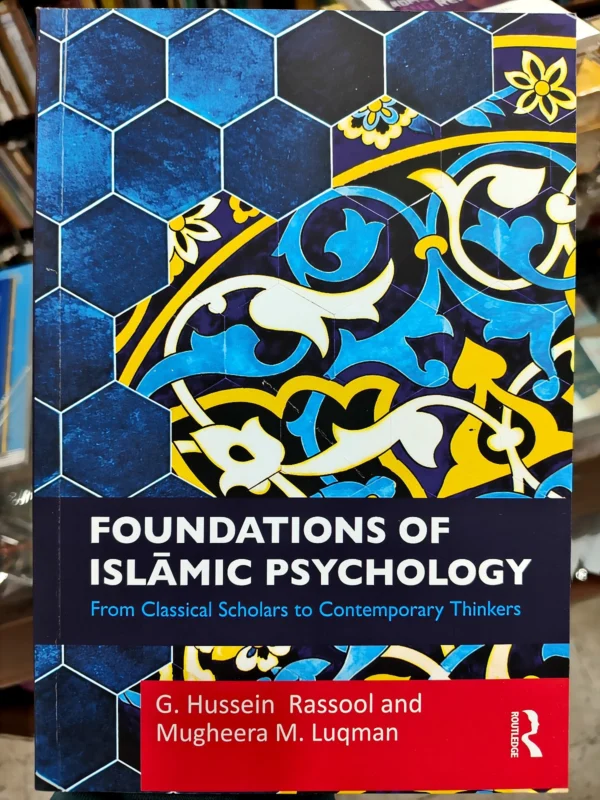
Foundations of Islamic Psychology: From Classical Scholars to Contemporary Thinkers is a well-organised academic study by G. Hussein Rassool and Mugheera M. Luqman, published by Routledge. It introduces readers to the long tradition of Muslim thought on the soul, the mind and human behaviour. It also shows how that heritage speaks to modern psychology.
Who Foundations of Islamic Psychology Is For
This Islamic psychology book is written for students of psychology, counselling and Islamic studies who want a structured introduction to the field. Therapists and mental health workers who serve Muslim clients will find it useful for understanding the worldview those clients bring into the room. Teachers, imams and community workers who guide young Muslims through questions of character and wellbeing can draw on its discussions as well.
General readers are welcome too. You may have wondered whether Muslim scholars thought seriously about emotions, motivation, happiness and self-discipline long before modern psychology existed. Foundations of Islamic Psychology offers a clear, referenced answer. The language is academic but readable, with sources cited in the text so you can follow up any idea that interests you.
What’s Inside the Book
As the subtitle promises, the book moves from classical scholars to contemporary thinkers. The authors present the lives, writings and psychological ideas of major figures of Muslim intellectual history. They explain what each contributed to our understanding of the nafs (self) and how those insights compare with present-day theories.
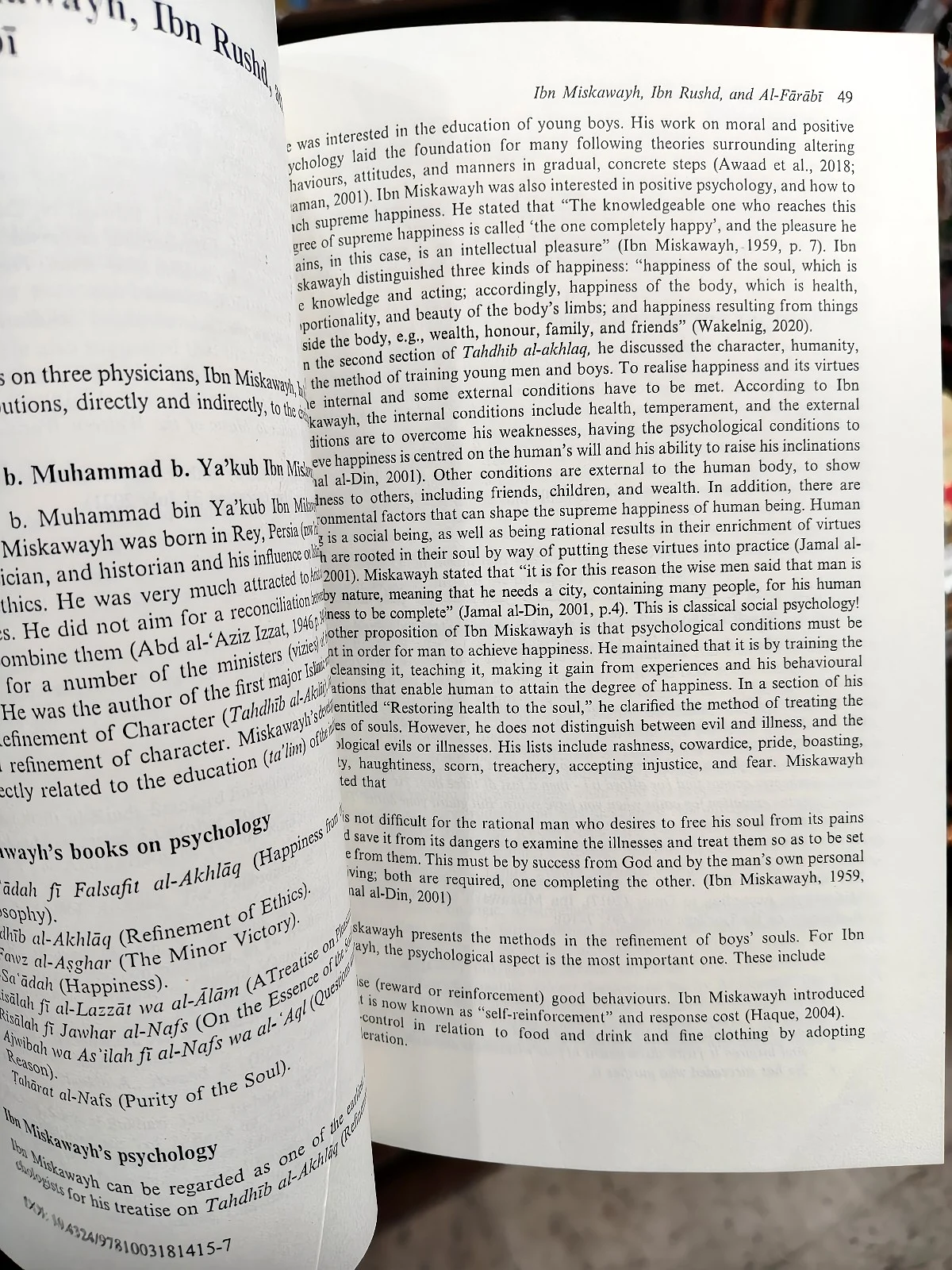
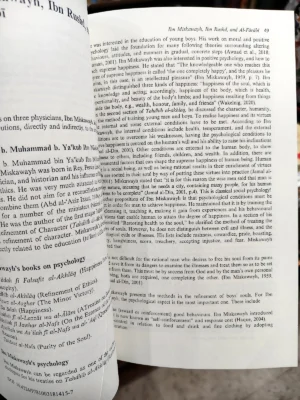
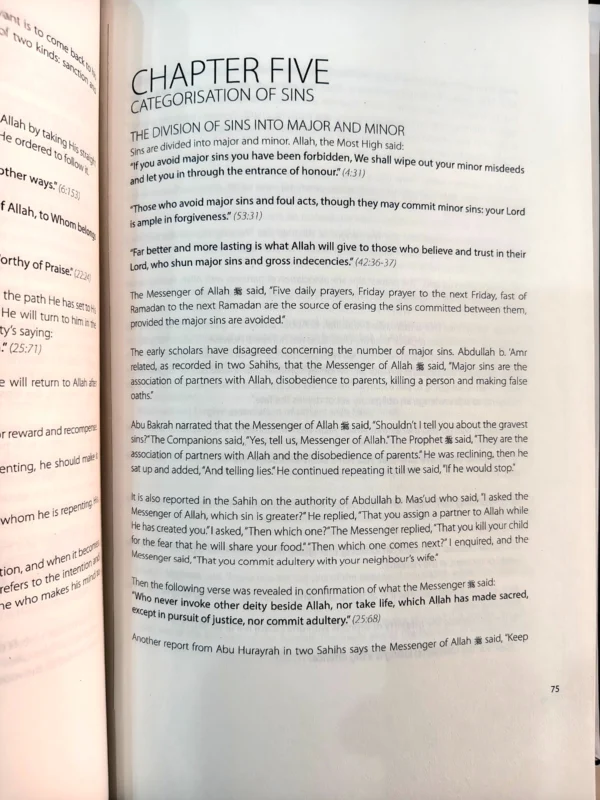
The inside pages shown in our photos come from the chapter on Ibn Miskawayh and Ibn Rushd. Here the authors list Ibn Miskawayh’s works on psychology and ethics, including Tahdhib al-Akhlaq (Refinement of Character). They explore his idea of three kinds of happiness: of the soul, of the body, and of things outside the body such as family and honour. They also discuss his step-by-step method for training young boys in good character, and why he saw the human being as social by nature.
The chapter also covers his approach to restoring health to the soul, in which vices such as rashness, cowardice, pride and fear are treated as illnesses of the soul. The authors show how his use of praise for good behaviour and his methods of self-control resemble what modern psychology calls reinforcement, self-reinforcement and response cost. This kind of comparison runs through the book and makes it valuable for anyone building bridges between faith and clinical practice.
Beyond individual scholars, the book helps readers see Islamic psychology as a coherent discipline rooted in the Quran, the Sunnah of the Prophet Muhammad ﷺ and centuries of scholarship, rather than a set of scattered quotations. Each chapter carries its own references, making the work suitable as a course text or a starting point for research.
Edition Details
- Title: Foundations of Islamic Psychology: From Classical Scholars to Contemporary Thinkers
- Authors: G. Hussein Rassool and Mugheera M. Luqman
- Language and script: English, Latin script, with Arabic terms transliterated
- Binding: Paperback
- Pages: please contact us for the exact page count
- Publisher: Routledge
Why Buy from Lafz Bookstore
Lafz Bookstore is an Islamic bookstore based in Srinagar, Kashmir, serving readers across the country. We stock carefully chosen titles in English, Urdu and Arabic, from Quran and tafsir to history, Iqbaliyat and academic works like this Islamic psychology textbook.
Every order is packed with care so books reach you in good condition, and we offer pan-India delivery to your doorstep. The photos on this page show the actual book, including the cover and inside pages, so you know exactly what you are ordering. If you have a question before buying, our team is happy to help.
Frequently Asked Questions
Is Foundations of Islamic Psychology suitable for beginners?
Yes. While it is an academic work, it explains key Arabic terms and introduces each scholar before discussing their ideas, so a motivated beginner can follow it comfortably.
Which scholars does the book discuss?
It covers classical Muslim scholars such as Ibn Miskawayh and Ibn Rushd and moves on to contemporary thinkers in the field of Islamic psychology. Pages from the chapter on Ibn Miskawayh are shown in our photos.
Can counsellors use this book in their practice?
Many counsellors and therapists turn to Foundations of Islamic Psychology to understand Islamic concepts of the self and wellbeing. It is a reference for understanding, not a clinical manual, so it works best alongside professional training.
Explore more Islamic Books books at Lafz Bookstore, and follow us on Instagram for new arrivals and offers.











Reviews
There are no reviews yet.