



-55%
 Kashmiri Guide I 2nd Semester (Bhat 7366)P-86
 New Kashir Zaan Khavat

₹650.00 Original price was: ₹650.00.₹295.00Current price is: ₹295.00.
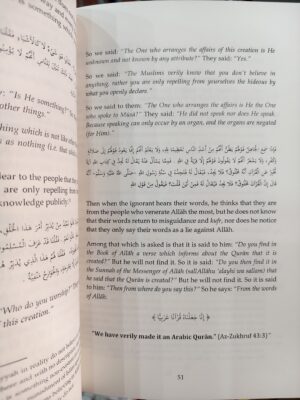
Imam Ahmad bin Hanbal’s (RH) refutation of the Jahmiyyah, in English.
1 in stock
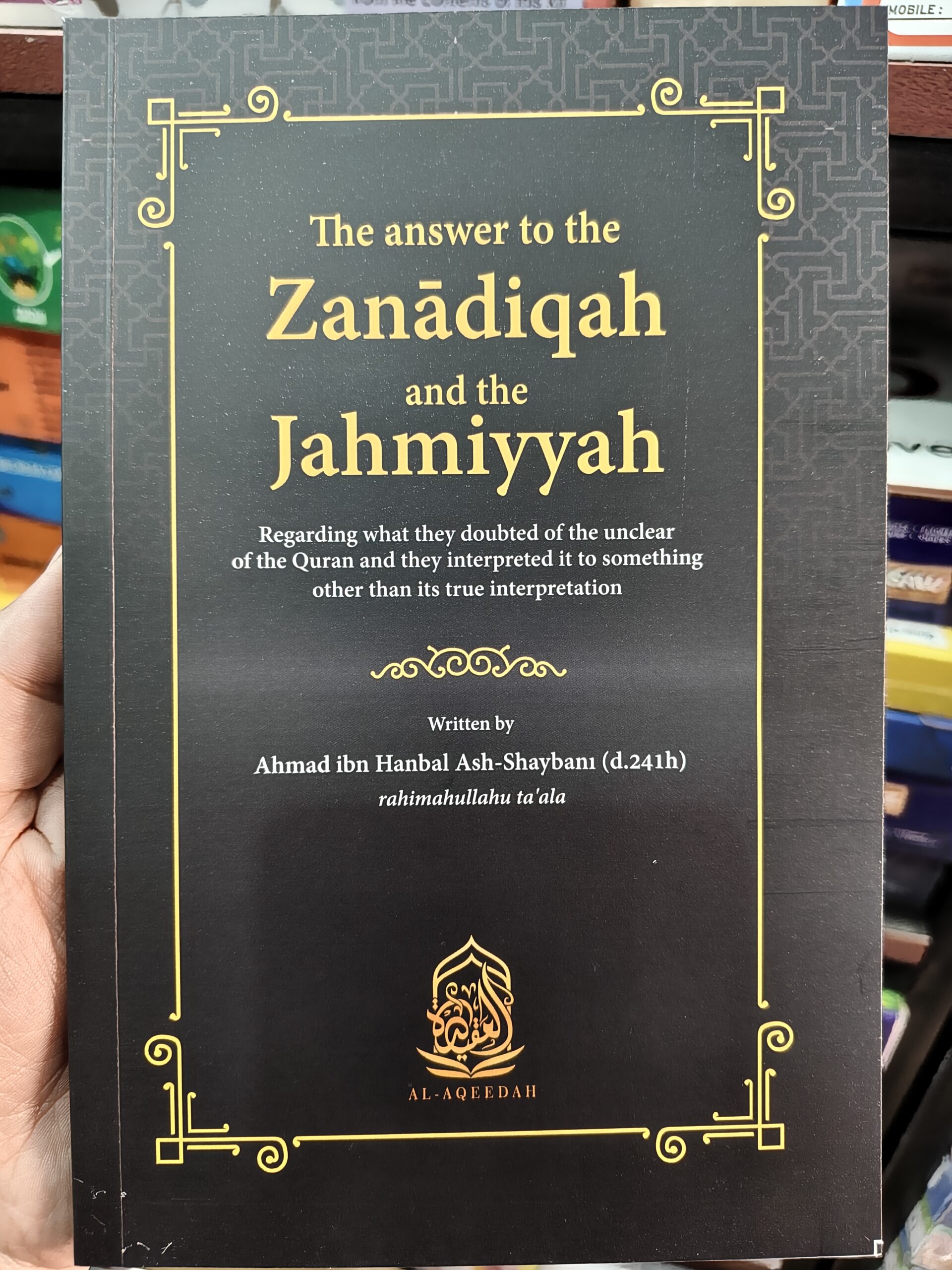
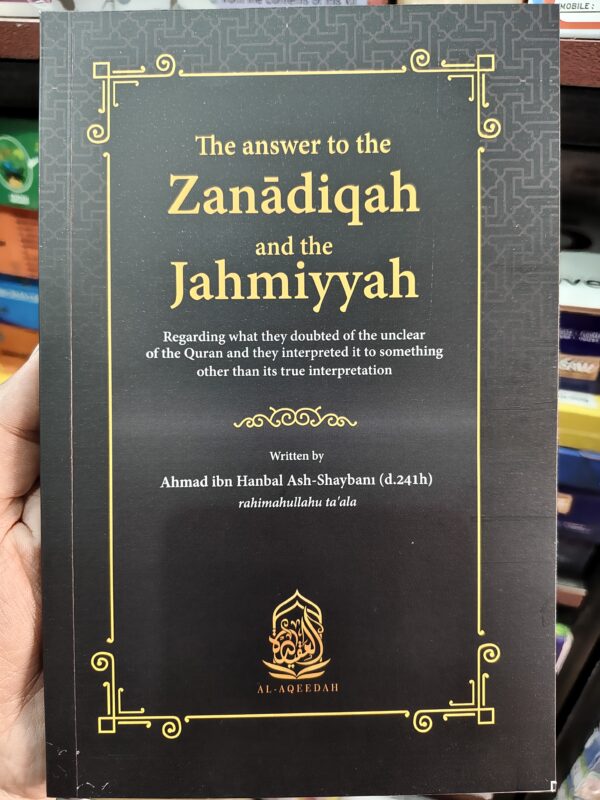
The Answer to the Zanadiqah and the Jahmiyyah is a classical work on belief traditionally attributed to Imam Ahmad ibn Hanbal, who lived from about 780 to 855 CE in Baghdad. Its Arabic title is al-Radd ‘ala al-Zanadiqa wa’l-Jahmiyya. The book answers two groups: the Jahmiyyah, the followers of the school of Jahm ibn Safwan, who denied the attributes of Allah, and the zanadiqah, a word used for heretics and freethinkers.
We use the wording “attributed to Imam Ahmad” with care. Modern researchers have studied the manuscripts of this text and found that it exists in several versions that developed over the centuries, so scholars differ on how much of it goes back to the Imam himself.
Ahmad ibn Hanbal is remembered for standing firm during the Mihna, the trial in which the caliph al-Ma’mun supported the doctrine that the Qur’an was created. Ahmad refused and held that the Qur’an is the speech of Allah and not created. He was imprisoned and flogged under al-Mu’tasim, and he was honoured after his release under al-Mutawakkil. Texts like this one belong to that period of debate over belief.
This book is for students of ‘aqidah and the history of Islamic thought, readers interested in the Hanbali school, and teachers who wish to study how early scholars wrote against groups they considered to have departed from the path of the Companions. Because the subject is technical, a teacher’s guidance is helpful.
Theology is a delicate subject. Read the text slowly and keep a note of questions to put to a scholar. Keep in mind that the words of early debates were addressed to the circumstances of their time. The aim of reading is to strengthen one’s own faith and understanding, not to win arguments.
There is more than one English version of this work, including a 1964 translation by Morris S. Seale published by Luzac, and other editions in print. The translator and publisher of the copy you receive appear on its title page; please check the listing or message us on WhatsApp at 9906523492 if you need a particular translator.
Modern books on belief often summarise what earlier scholars said. Reading a primary text, even in translation, lets the student hear the earlier voice directly, with its vocabulary, concerns and manner of argument. It also helps the reader notice how the same questions come back in new forms in each age, and how patient scholars answered them. Study such books alongside the Qur’an and a trusted explanation, and return to them over the years.
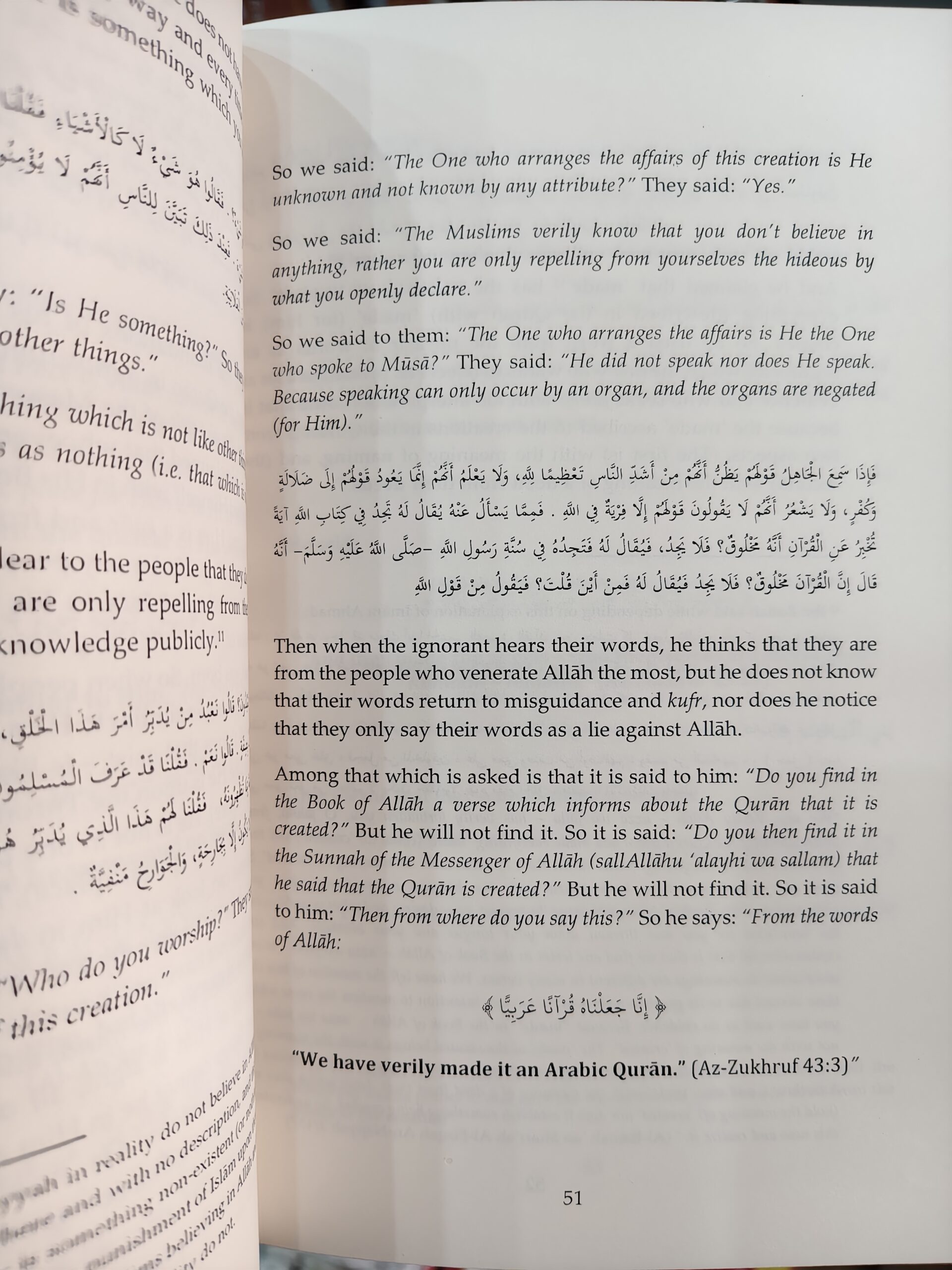
The book is an English edition of a classical Arabic text. For the exact translator, publisher and year of the copy in stock, please check the listing photographs or ask us. We dispatch the same day from Srinagar.
Who were the Jahmiyyah? They were the followers of Jahm ibn Safwan, who denied the attributes of Allah, and early scholars wrote against them.
Did Imam Ahmad write this book? It is traditionally attributed to him, though modern scholars note that the text exists in several versions.
Is it for beginners? It is a technical classical text, so a teacher’s guidance helps.
Looking for more books like this? Browse our Creed & Fiqh collection or explore all Islamic Books. Follow Lafz Bookstore on Instagram for new arrivals and book recommendations.
| Author | |
|---|---|
| Publisher |
Only logged in customers who have purchased this product may leave a review.
Orders are dispatched the same day.
Prepaid orders get 5% off with coupon code PREPAID. For Cash on Delivery, please message us on WhatsApp (99065 23492).
Shipping charges, if any, are shown at checkout. If an item becomes unavailable after you order, we will let you know and refund it the way you paid.
Full details: Delivery Policy · Refund Policy
The Answer to the Zanadiqah and the Jahmiyyah is a classical work on belief traditionally attributed to Imam Ahmad ibn Hanbal, who lived from about 780 to 855 CE in Baghdad. Its Arabic title is al-Radd ‘ala al-Zanadiqa wa’l-Jahmiyya. The book answers two groups: the Jahmiyyah, the followers of the school of Jahm ibn Safwan, who denied the attributes of Allah, and the zanadiqah, a word used for heretics and freethinkers.
We use the wording “attributed to Imam Ahmad” with care. Modern researchers have studied the manuscripts of this text and found that it exists in several versions that developed over the centuries, so scholars differ on how much of it goes back to the Imam himself.
Ahmad ibn Hanbal is remembered for standing firm during the Mihna, the trial in which the caliph al-Ma’mun supported the doctrine that the Qur’an was created. Ahmad refused and held that the Qur’an is the speech of Allah and not created. He was imprisoned and flogged under al-Mu’tasim, and he was honoured after his release under al-Mutawakkil. Texts like this one belong to that period of debate over belief.
This book is for students of ‘aqidah and the history of Islamic thought, readers interested in the Hanbali school, and teachers who wish to study how early scholars wrote against groups they considered to have departed from the path of the Companions. Because the subject is technical, a teacher’s guidance is helpful.
Theology is a delicate subject. Read the text slowly and keep a note of questions to put to a scholar. Keep in mind that the words of early debates were addressed to the circumstances of their time. The aim of reading is to strengthen one’s own faith and understanding, not to win arguments.
There is more than one English version of this work, including a 1964 translation by Morris S. Seale published by Luzac, and other editions in print. The translator and publisher of the copy you receive appear on its title page; please check the listing or message us on WhatsApp at 9906523492 if you need a particular translator.
Modern books on belief often summarise what earlier scholars said. Reading a primary text, even in translation, lets the student hear the earlier voice directly, with its vocabulary, concerns and manner of argument. It also helps the reader notice how the same questions come back in new forms in each age, and how patient scholars answered them. Study such books alongside the Qur’an and a trusted explanation, and return to them over the years.
The book is an English edition of a classical Arabic text. For the exact translator, publisher and year of the copy in stock, please check the listing photographs or ask us. We dispatch the same day from Srinagar.
Who were the Jahmiyyah? They were the followers of Jahm ibn Safwan, who denied the attributes of Allah, and early scholars wrote against them.
Did Imam Ahmad write this book? It is traditionally attributed to him, though modern scholars note that the text exists in several versions.
Is it for beginners? It is a technical classical text, so a teacher’s guidance helps.
Looking for more books like this? Browse our Creed & Fiqh collection or explore all Islamic Books. Follow Lafz Bookstore on Instagram for new arrivals and book recommendations.
| Author | |
|---|---|
| Publisher |
There are no reviews yet.
Only logged in customers who have purchased this product may leave a review.
Orders are dispatched the same day.
Prepaid orders get 5% off with coupon code PREPAID. For Cash on Delivery, please message us on WhatsApp (99065 23492).
Shipping charges, if any, are shown at checkout. If an item becomes unavailable after you order, we will let you know and refund it the way you paid.
Full details: Delivery Policy · Refund Policy
No account yet?
Create an AccountTell us the name and we’ll hunt it down for you. We reply instantly on WhatsApp.
Ask on WhatsAppOpens WhatsApp with your message ready. Just hit send.
WhatsApp us




Reviews
There are no reviews yet.