



-37%
 Kashmiri Guide I 2nd Semester (Bhat 7366)P-86
 New Kashir Zaan Khavat
₹399.00 Original price was: ₹399.00.₹250.00Current price is: ₹250.00.
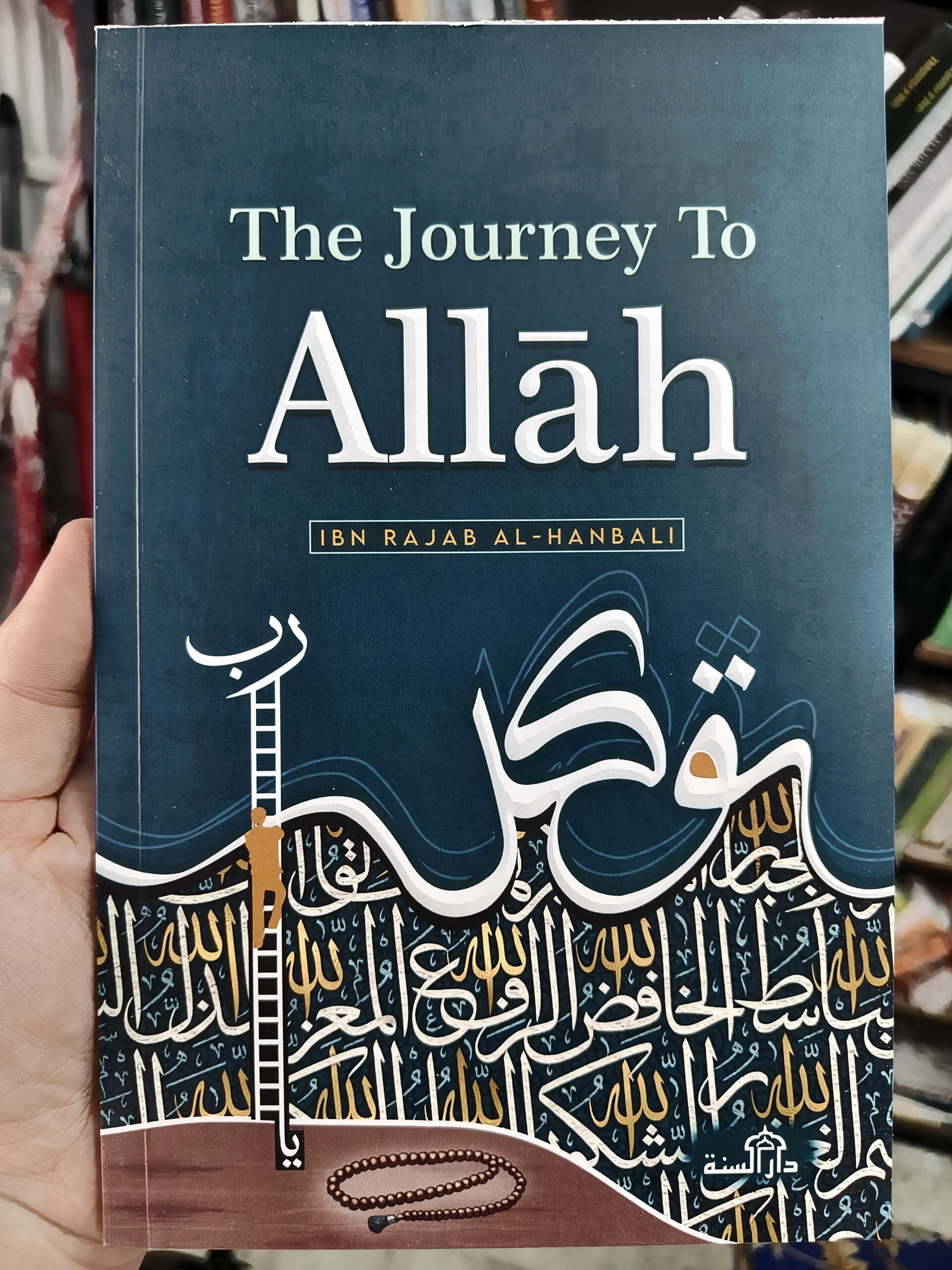
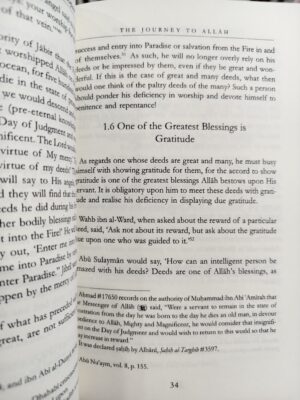
The Journey to Allah by Imam Ibn Rajab al-Hanbali (RH), in English. Dar as-Sunnah.
2 in stock
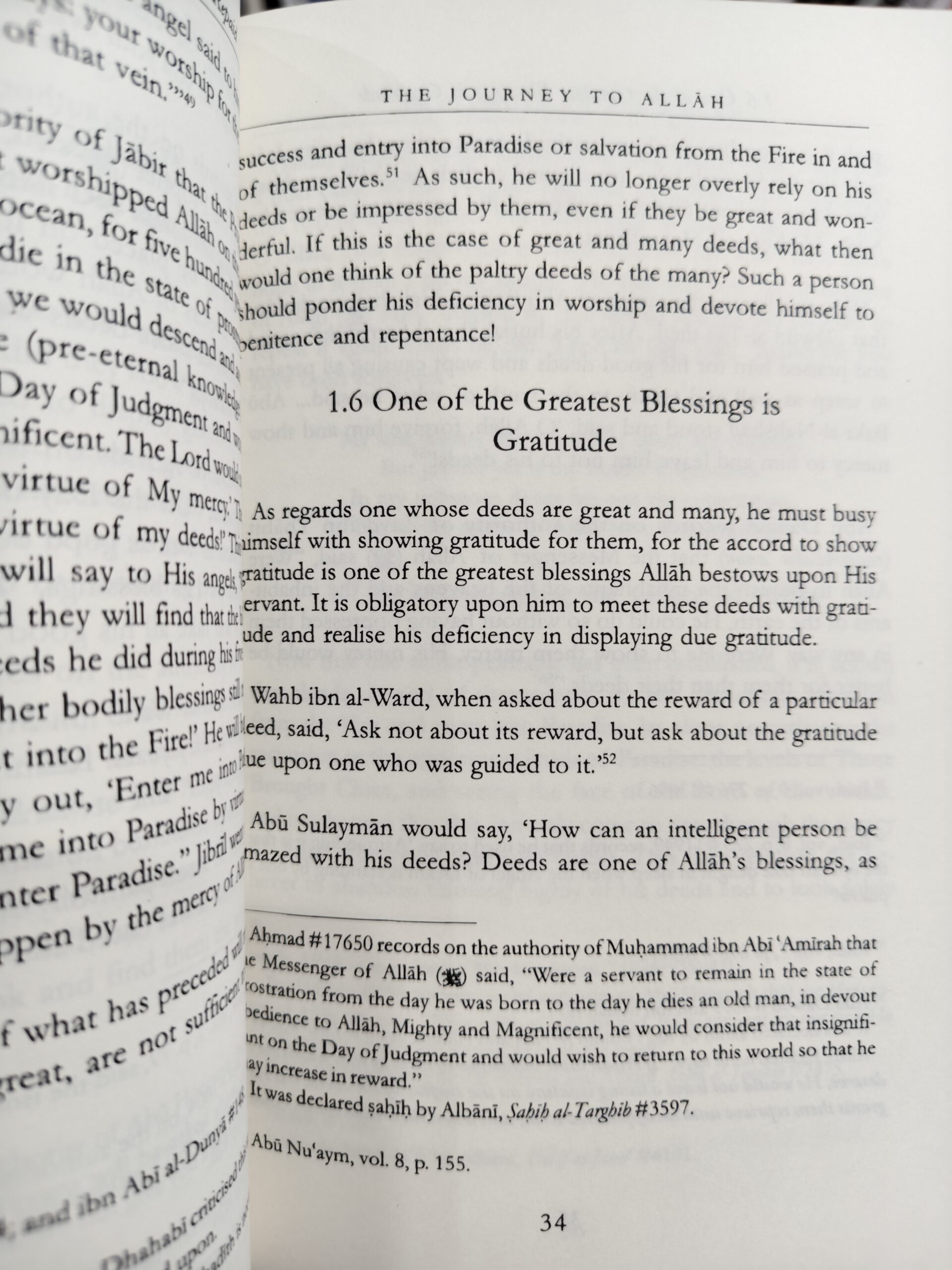
The Journey to Allah is a work by Ibn Rajab al-Hanbali on the spiritual stations through which the heart passes as it worships Allah and travels towards Him. This edition is published by Daar Us-Sunnah as a softcover of about 110 pages. It is written in a gentle, reflective style and is meant to be read slowly.
The book opens with the well-known hadith that no one is saved by deeds alone without the mercy of Allah. From this starting point it builds a picture of the believer’s path: sincere effort on one side and complete reliance on Allah’s mercy on the other. It also stresses steady, moderate effort over bursts of enthusiasm that soon fade.
Zayn al-Din Abd al-Rahman ibn Ahmad, known as Ibn Rajab, lived in Damascus from 736 to 795 AH, which is about 1335 to 1393 CE. He was a Hanbali jurist, a scholar of hadith, a historian and a preacher. Among his best-known works are Jami’ al-‘Ulum wa’l-Hikam, Lata’if al-Ma’arif, an incomplete commentary on Sahih al-Bukhari called Fath al-Bari, and al-Dhayl ‘ala Tabaqat al-Hanabila. His writings on the heart and on worship are valued for their clarity and warmth.
Many believers know what they should do and still find the heart heavy or distracted. Books on the stations of the path speak to that experience. They remind the reader that the heart has states, that these states change, and that every one of them calls for a fitting response, whether it is patience, gratitude, hope, fear or love. By starting with the hadith on Allah’s mercy, the book guards the reader against two mistakes: relying on one’s own deeds as if they were enough, and giving up effort as if deeds did not matter. The believer strives, and then turns to Allah in hope.
The book suits anyone who wants to deepen their worship and understand the inner side of the religion. Students, parents, those who give reminders in the mosque, and readers who enjoy classical writing on the heart will find it rewarding. The poetry at the start of each chapter also makes it a pleasant read for those who like verse.
Read one chapter at a time. Pause after the poem and think about what it says before you go on to the explanation. Ask yourself which station best describes your own heart at present and what small step you can take. Choose a few acts of worship that you can keep up daily, since steady effort is a theme of the book, and review your progress each week. Make dua to Allah for sincerity and for acceptance of your deeds, and keep a notebook of lines that move you.
This is a book of reminders. It is best read with a calm mind, perhaps after Fajr or before sleep, and it rewards a second reading. It is a thoughtful gift for a friend who is starting to practise, for a relative before Ramadan, or for a student of knowledge who wants a work on the heart to sit beside books of law and creed.
Scholars of the heart often described the believer as a bird that flies with two wings, hope and fear, with love as its head. A heart that has only hope may become careless, and a heart that has only fear may despair. The hadith with which the book begins keeps the two in balance: the believer works as hard as he can and then hopes for the mercy of Allah, knowing that no deed is enough by itself. Returning to this lesson from time to time keeps the heart steady in days of ease and in days of struggle.
The Prophet ﷺ taught that the most beloved deeds to Allah are those done regularly, even if they are small. The book builds on that teaching. A person who sets a modest daily routine of prayer, recitation and remembrance and keeps it up for years often goes further than one who starts with great zeal and then stops.
Published by Daar Us-Sunnah, softcover, about 110 pages. Printings may differ, so please message us on WhatsApp at 9906523492 for details of the copy in stock. Same-day dispatch from Srinagar.
Who is the author? Ibn Rajab al-Hanbali, the Hanbali scholar of Damascus.
How is each chapter arranged? Each chapter opens with poetry introducing a station, followed by an explanation.
Is it a long book? It is a softcover of about 110 pages, so it is of moderate length.
Looking for more books like this? Browse our General collection or explore all Islamic Books. Follow Lafz Bookstore on Instagram for new arrivals and book recommendations.
| Author | |
|---|---|
| Publisher |
Only logged in customers who have purchased this product may leave a review.
Orders are dispatched the same day.
Prepaid orders get 5% off with coupon code PREPAID. For Cash on Delivery, please message us on WhatsApp (99065 23492).
Shipping charges, if any, are shown at checkout. If an item becomes unavailable after you order, we will let you know and refund it the way you paid.
Full details: Delivery Policy · Refund Policy
The Journey to Allah is a work by Ibn Rajab al-Hanbali on the spiritual stations through which the heart passes as it worships Allah and travels towards Him. This edition is published by Daar Us-Sunnah as a softcover of about 110 pages. It is written in a gentle, reflective style and is meant to be read slowly.
The book opens with the well-known hadith that no one is saved by deeds alone without the mercy of Allah. From this starting point it builds a picture of the believer’s path: sincere effort on one side and complete reliance on Allah’s mercy on the other. It also stresses steady, moderate effort over bursts of enthusiasm that soon fade.
Zayn al-Din Abd al-Rahman ibn Ahmad, known as Ibn Rajab, lived in Damascus from 736 to 795 AH, which is about 1335 to 1393 CE. He was a Hanbali jurist, a scholar of hadith, a historian and a preacher. Among his best-known works are Jami’ al-‘Ulum wa’l-Hikam, Lata’if al-Ma’arif, an incomplete commentary on Sahih al-Bukhari called Fath al-Bari, and al-Dhayl ‘ala Tabaqat al-Hanabila. His writings on the heart and on worship are valued for their clarity and warmth.
Many believers know what they should do and still find the heart heavy or distracted. Books on the stations of the path speak to that experience. They remind the reader that the heart has states, that these states change, and that every one of them calls for a fitting response, whether it is patience, gratitude, hope, fear or love. By starting with the hadith on Allah’s mercy, the book guards the reader against two mistakes: relying on one’s own deeds as if they were enough, and giving up effort as if deeds did not matter. The believer strives, and then turns to Allah in hope.
The book suits anyone who wants to deepen their worship and understand the inner side of the religion. Students, parents, those who give reminders in the mosque, and readers who enjoy classical writing on the heart will find it rewarding. The poetry at the start of each chapter also makes it a pleasant read for those who like verse.
Read one chapter at a time. Pause after the poem and think about what it says before you go on to the explanation. Ask yourself which station best describes your own heart at present and what small step you can take. Choose a few acts of worship that you can keep up daily, since steady effort is a theme of the book, and review your progress each week. Make dua to Allah for sincerity and for acceptance of your deeds, and keep a notebook of lines that move you.
This is a book of reminders. It is best read with a calm mind, perhaps after Fajr or before sleep, and it rewards a second reading. It is a thoughtful gift for a friend who is starting to practise, for a relative before Ramadan, or for a student of knowledge who wants a work on the heart to sit beside books of law and creed.
Scholars of the heart often described the believer as a bird that flies with two wings, hope and fear, with love as its head. A heart that has only hope may become careless, and a heart that has only fear may despair. The hadith with which the book begins keeps the two in balance: the believer works as hard as he can and then hopes for the mercy of Allah, knowing that no deed is enough by itself. Returning to this lesson from time to time keeps the heart steady in days of ease and in days of struggle.
The Prophet ﷺ taught that the most beloved deeds to Allah are those done regularly, even if they are small. The book builds on that teaching. A person who sets a modest daily routine of prayer, recitation and remembrance and keeps it up for years often goes further than one who starts with great zeal and then stops.
Published by Daar Us-Sunnah, softcover, about 110 pages. Printings may differ, so please message us on WhatsApp at 9906523492 for details of the copy in stock. Same-day dispatch from Srinagar.
Who is the author? Ibn Rajab al-Hanbali, the Hanbali scholar of Damascus.
How is each chapter arranged? Each chapter opens with poetry introducing a station, followed by an explanation.
Is it a long book? It is a softcover of about 110 pages, so it is of moderate length.
Looking for more books like this? Browse our General collection or explore all Islamic Books. Follow Lafz Bookstore on Instagram for new arrivals and book recommendations.
| Author | |
|---|---|
| Publisher |
There are no reviews yet.
Only logged in customers who have purchased this product may leave a review.
Orders are dispatched the same day.
Prepaid orders get 5% off with coupon code PREPAID. For Cash on Delivery, please message us on WhatsApp (99065 23492).
Shipping charges, if any, are shown at checkout. If an item becomes unavailable after you order, we will let you know and refund it the way you paid.
Full details: Delivery Policy · Refund Policy
No account yet?
Create an AccountWhatsApp us



Reviews
There are no reviews yet.