





 Kashmiri Guide I 2nd Semester (Bhat 7366)P-86
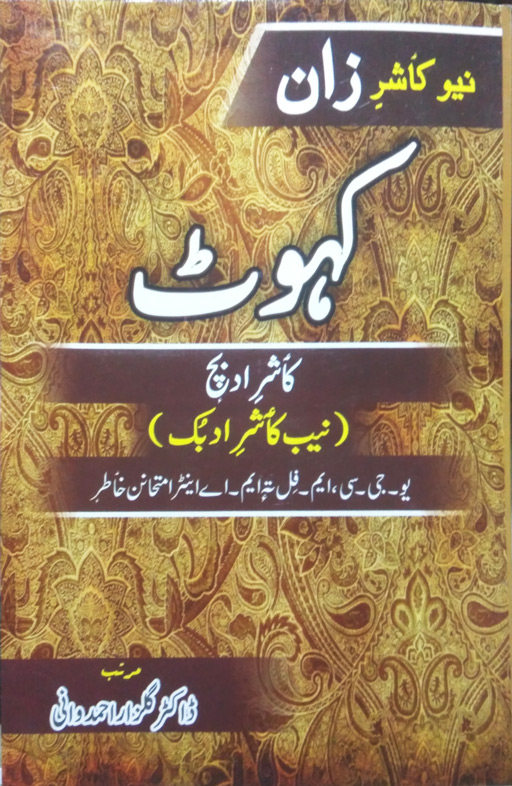 New Kashir Zaan Khavat


₹125.00
10 in stock
Laboratory Manual for Genetic Engineering by S. John Vennison is a practical bench guide for students who are learning the techniques behind genetic engineering. Instead of discussing theory alone, it walks the reader through experiments step by step, so that a student standing at the lab bench knows what to prepare, what to do and what to observe. Lafz Bookstore in Srinagar stocks it for biotechnology, molecular biology and microbiology students across Kashmir and India. Please message us on WhatsApp at 9906523492 for details of the copy in stock.
The publisher describes about sixty experiments supported by figures, with appendices on preparing stock solutions, converting DNA and protein quantities, and a reference on restriction enzymes and their recognition sequences. These appendices are the kind of material students keep returning to during practicals.
Many genetic engineering textbooks focus on well-known laboratory strains and standard protocols. This manual gives special attention to DNA isolation from Gram-positive bacteria such as Bacillus, to a slot-lysis electrophoresis method used for DNA profiling of both Gram-negative and Gram-positive bacteria, and to plasmid transfer in Bacillus, cyanobacteria and Agrobacterium tumefaciens. A student who wants to move beyond the usual Escherichia coli exercises will find these sections a useful change of scenery.
Genetic engineering is a hands-on subject. You can read about restriction digestion for hours, yet the concepts become clear only after you set up a digest, run a gel and see the bands. A good manual saves time and reduces avoidable errors: reagents are listed, procedures are numbered, and the reader learns to record results properly. It also builds the habits of a careful researcher, such as labelling tubes, keeping a clean workspace, using controls and writing down every observation on the day of the experiment.
Read the whole experiment before you enter the lab, not while you are standing at the bench. Note down the reagents, the incubation times and the safety points, and ask your instructor about anything unclear. Keep a separate laboratory notebook and record your observations as they happen. After the practical, compare your results with what the manual leads you to expect, and if they differ, think about the possible reasons: a contaminated reagent, a pipetting error, an incorrect temperature. This habit of troubleshooting is what turns a student into a scientist. Always follow the safety rules of your own laboratory, particularly when handling chemicals, heat sources and electrical equipment for electrophoresis. This manual is a companion to your lab course and your instructor’s guidance, not a replacement for it.
A manual tells you how, while a theory textbook tells you why. Students usually do best when they keep a molecular biology or genetics textbook beside the manual, so that each experiment is linked to the concept behind it. Our Higher Education section carries many such titles for science students.
Author: S. John Vennison. Publisher: PHI Learning. Format: paperback, 140 pages, as listed by the publisher. Subject: genetic engineering laboratory techniques. For the edition and year of the copy in stock, please message us on WhatsApp at 9906523492. Same-day dispatch from Srinagar. Delivery takes about 1 day in Srinagar and 3 to 10 days across the rest of India.
Who wrote this book? S. John Vennison.
Is it a theory book or a practical manual? It is a practical laboratory manual with experiments for genetic engineering courses.
Does it include PCR and electrophoresis? Yes, both are part of the techniques it covers.
Who is it meant for? Undergraduate and postgraduate biotechnology students, and students of molecular biology and molecular microbiology.
How fast is delivery? We dispatch the same day from Srinagar, with delivery in about 1 day in Srinagar and 3 to 10 days elsewhere in India.
Looking for more college books like this? Browse all Higher Education books. Follow Lafz Bookstore on Instagram for new arrivals and book recommendations.
| Author | |
|---|---|
| Publisher | |
| Language |
Only logged in customers who have purchased this product may leave a review.
Orders are dispatched the same day.
Prepaid orders get 5% off with coupon code PREPAID. For Cash on Delivery, please message us on WhatsApp (99065 23492).
Shipping charges, if any, are shown at checkout. If an item becomes unavailable after you order, we will let you know and refund it the way you paid.
Full details: Delivery Policy · Refund Policy
Laboratory Manual for Genetic Engineering by S. John Vennison is a practical bench guide for students who are learning the techniques behind genetic engineering. Instead of discussing theory alone, it walks the reader through experiments step by step, so that a student standing at the lab bench knows what to prepare, what to do and what to observe. Lafz Bookstore in Srinagar stocks it for biotechnology, molecular biology and microbiology students across Kashmir and India. Please message us on WhatsApp at 9906523492 for details of the copy in stock.
The publisher describes about sixty experiments supported by figures, with appendices on preparing stock solutions, converting DNA and protein quantities, and a reference on restriction enzymes and their recognition sequences. These appendices are the kind of material students keep returning to during practicals.
Many genetic engineering textbooks focus on well-known laboratory strains and standard protocols. This manual gives special attention to DNA isolation from Gram-positive bacteria such as Bacillus, to a slot-lysis electrophoresis method used for DNA profiling of both Gram-negative and Gram-positive bacteria, and to plasmid transfer in Bacillus, cyanobacteria and Agrobacterium tumefaciens. A student who wants to move beyond the usual Escherichia coli exercises will find these sections a useful change of scenery.
Genetic engineering is a hands-on subject. You can read about restriction digestion for hours, yet the concepts become clear only after you set up a digest, run a gel and see the bands. A good manual saves time and reduces avoidable errors: reagents are listed, procedures are numbered, and the reader learns to record results properly. It also builds the habits of a careful researcher, such as labelling tubes, keeping a clean workspace, using controls and writing down every observation on the day of the experiment.
Read the whole experiment before you enter the lab, not while you are standing at the bench. Note down the reagents, the incubation times and the safety points, and ask your instructor about anything unclear. Keep a separate laboratory notebook and record your observations as they happen. After the practical, compare your results with what the manual leads you to expect, and if they differ, think about the possible reasons: a contaminated reagent, a pipetting error, an incorrect temperature. This habit of troubleshooting is what turns a student into a scientist. Always follow the safety rules of your own laboratory, particularly when handling chemicals, heat sources and electrical equipment for electrophoresis. This manual is a companion to your lab course and your instructor’s guidance, not a replacement for it.
A manual tells you how, while a theory textbook tells you why. Students usually do best when they keep a molecular biology or genetics textbook beside the manual, so that each experiment is linked to the concept behind it. Our Higher Education section carries many such titles for science students.
Author: S. John Vennison. Publisher: PHI Learning. Format: paperback, 140 pages, as listed by the publisher. Subject: genetic engineering laboratory techniques. For the edition and year of the copy in stock, please message us on WhatsApp at 9906523492. Same-day dispatch from Srinagar. Delivery takes about 1 day in Srinagar and 3 to 10 days across the rest of India.
Who wrote this book? S. John Vennison.
Is it a theory book or a practical manual? It is a practical laboratory manual with experiments for genetic engineering courses.
Does it include PCR and electrophoresis? Yes, both are part of the techniques it covers.
Who is it meant for? Undergraduate and postgraduate biotechnology students, and students of molecular biology and molecular microbiology.
How fast is delivery? We dispatch the same day from Srinagar, with delivery in about 1 day in Srinagar and 3 to 10 days elsewhere in India.
Looking for more college books like this? Browse all Higher Education books. Follow Lafz Bookstore on Instagram for new arrivals and book recommendations.
| Author | |
|---|---|
| Publisher | |
| Language |
There are no reviews yet.
Only logged in customers who have purchased this product may leave a review.
Orders are dispatched the same day.
Prepaid orders get 5% off with coupon code PREPAID. For Cash on Delivery, please message us on WhatsApp (99065 23492).
Shipping charges, if any, are shown at checkout. If an item becomes unavailable after you order, we will let you know and refund it the way you paid.
Full details: Delivery Policy · Refund Policy
No account yet?
Create an AccountTell us the name and we’ll hunt it down for you. We reply instantly on WhatsApp.
Ask on WhatsAppOpens WhatsApp with your message ready. Just hit send.
WhatsApp us











Reviews
There are no reviews yet.