




-6%

 Kashmiri Guide I 2nd Semester (Bhat 7366)P-86
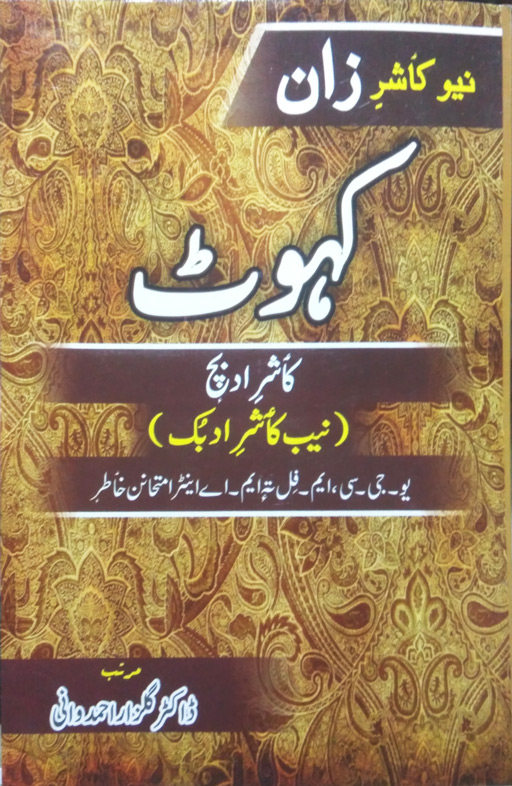 New Kashir Zaan Khavat


₹350.00 Original price was: ₹350.00.₹330.00Current price is: ₹330.00.
10 in stock
Introduction to Taxonomy of Angiosperms by B. K. Verma is a botany textbook on how flowering plants are named, described and classified. Anyone studying the taxonomy of angiosperms will find in it both the principles behind plant classification and detailed accounts of important plant families. Lafz Bookstore in Srinagar stocks it for botany and life science students in Kashmir and across India. Please message us on WhatsApp at 9906523492 for details of the copy in stock.
Each family is treated in a consistent way, covering its distribution, vegetative and floral features, classification, affinities, economic importance and common examples. This uniform layout makes revision easier, since you know where to look for a particular point when you compare one family with another.
Before you can study, conserve or use a plant, you must be able to identify it correctly. Taxonomy gives botanists a shared language, so that a species described in one country can be recognised in another. It supports work in ecology, agriculture, medicine and forestry. For a region like Kashmir, with its rich variety of Himalayan flora, the skills of observation and description that taxonomy teaches are especially valuable for anyone who enjoys fieldwork.
Taxonomy rewards practice with real plants. Whenever possible, take a flowering specimen and describe it using the pro forma given in the book, noting the habit, leaf, inflorescence, flower, fruit and seed. Then compare your notes with the family description. Prepare comparison tables for related families and revise them often, because the similarities and differences are easy to forget. Learn scientific names with correct spelling, since nomenclature is judged on precision. Use the glossary to master terms early, and visit a herbarium if one is available at your institution. This book is a companion to your course, your teachers and your own fieldwork, and does not replace them.
Author: B. K. Verma. Publisher: PHI Learning, in its Eastern Economy Edition, listed as 2010 with 480 pages in paperback, according to the publisher. For the exact printing of the copy in stock, please message us on WhatsApp at 9906523492. Same-day dispatch from Srinagar. Delivery takes about 1 day in Srinagar and 3 to 10 days across the rest of India.
Who wrote this book? B. K. Verma.
How many plant families does it describe? Fifty families of dicots and monocots.
Does it explain nomenclature? Yes, it covers the rules and codes of plant nomenclature, including the Vienna Code of 2006.
Is there help for practical work? Yes, it includes a pro forma for describing angiosperms and a key to the families.
How long will delivery take? About 1 day in Srinagar and 3 to 10 days in the rest of India, with same-day dispatch.
Looking for more college books like this? Browse all Higher Education books. Follow Lafz Bookstore on Instagram for new arrivals and book recommendations.
| Author | |
|---|---|
| Publisher | |
| Language |
Only logged in customers who have purchased this product may leave a review.
Orders are dispatched the same day.
Prepaid orders get 5% off with coupon code PREPAID. For Cash on Delivery, please message us on WhatsApp (99065 23492).
Shipping charges, if any, are shown at checkout. If an item becomes unavailable after you order, we will let you know and refund it the way you paid.
Full details: Delivery Policy · Refund Policy
Introduction to Taxonomy of Angiosperms by B. K. Verma is a botany textbook on how flowering plants are named, described and classified. Anyone studying the taxonomy of angiosperms will find in it both the principles behind plant classification and detailed accounts of important plant families. Lafz Bookstore in Srinagar stocks it for botany and life science students in Kashmir and across India. Please message us on WhatsApp at 9906523492 for details of the copy in stock.
Each family is treated in a consistent way, covering its distribution, vegetative and floral features, classification, affinities, economic importance and common examples. This uniform layout makes revision easier, since you know where to look for a particular point when you compare one family with another.
Before you can study, conserve or use a plant, you must be able to identify it correctly. Taxonomy gives botanists a shared language, so that a species described in one country can be recognised in another. It supports work in ecology, agriculture, medicine and forestry. For a region like Kashmir, with its rich variety of Himalayan flora, the skills of observation and description that taxonomy teaches are especially valuable for anyone who enjoys fieldwork.
Taxonomy rewards practice with real plants. Whenever possible, take a flowering specimen and describe it using the pro forma given in the book, noting the habit, leaf, inflorescence, flower, fruit and seed. Then compare your notes with the family description. Prepare comparison tables for related families and revise them often, because the similarities and differences are easy to forget. Learn scientific names with correct spelling, since nomenclature is judged on precision. Use the glossary to master terms early, and visit a herbarium if one is available at your institution. This book is a companion to your course, your teachers and your own fieldwork, and does not replace them.
Author: B. K. Verma. Publisher: PHI Learning, in its Eastern Economy Edition, listed as 2010 with 480 pages in paperback, according to the publisher. For the exact printing of the copy in stock, please message us on WhatsApp at 9906523492. Same-day dispatch from Srinagar. Delivery takes about 1 day in Srinagar and 3 to 10 days across the rest of India.
Who wrote this book? B. K. Verma.
How many plant families does it describe? Fifty families of dicots and monocots.
Does it explain nomenclature? Yes, it covers the rules and codes of plant nomenclature, including the Vienna Code of 2006.
Is there help for practical work? Yes, it includes a pro forma for describing angiosperms and a key to the families.
How long will delivery take? About 1 day in Srinagar and 3 to 10 days in the rest of India, with same-day dispatch.
Looking for more college books like this? Browse all Higher Education books. Follow Lafz Bookstore on Instagram for new arrivals and book recommendations.
| Author | |
|---|---|
| Publisher | |
| Language |
There are no reviews yet.
Only logged in customers who have purchased this product may leave a review.
Orders are dispatched the same day.
Prepaid orders get 5% off with coupon code PREPAID. For Cash on Delivery, please message us on WhatsApp (99065 23492).
Shipping charges, if any, are shown at checkout. If an item becomes unavailable after you order, we will let you know and refund it the way you paid.
Full details: Delivery Policy · Refund Policy
No account yet?
Create an AccountTell us the name and we’ll hunt it down for you. We reply instantly on WhatsApp.
Ask on WhatsAppOpens WhatsApp with your message ready. Just hit send.
WhatsApp us







Reviews
There are no reviews yet.