



-6%

 Kashmiri Guide I 2nd Semester (Bhat 7366)P-86
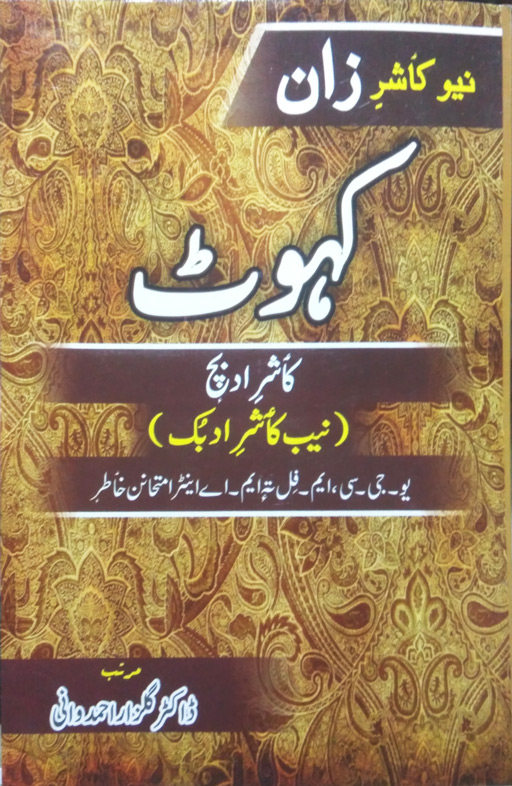 New Kashir Zaan Khavat


₹479.00 Original price was: ₹479.00.₹449.00Current price is: ₹449.00.6% off
11 in stock
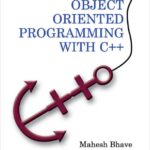 Object oriented programming with C++₹449This book
 Object Oriented Programming With C++₹539Added with it
Object Oriented Programming with C++ by Mahesh Bhave and Sunil Patekar is a Pearson textbook for students who want to learn Object oriented programming step by step using the C++ language. The edition we list is the second edition. It begins with the basics of computers and the move from C to C++, and then builds up to classes, inheritance, polymorphism, templates and exception handling. Please message us on WhatsApp at 9906523492 for details of the copy in stock.
Lafz Bookstore in Srinagar is happy to serve students of computer science, IT and engineering in Kashmir and across India, and this is a useful title for anyone who needs a clear route into C++ and the object oriented style of thinking.
According to the publisher’s contents, the book moves through a long and well-ordered list of topics:
The book also carries a set of appendices that include C++ keywords, operator precedence, header files, flags and manipulators, the Turbo C++ environment and mini projects.
Object oriented programming lets you model a problem as a group of objects that hold data and behaviour together. Instead of writing one long sequence of instructions, you design classes, create objects from them and let those objects work together. This approach makes programs easier to reuse, extend and maintain. It is the foundation of many languages used in industry, so the ideas you learn here will help you long after your first C++ course is over.
C++ is a good language for this purpose because it grew out of C. Students who already know the basics of C can see exactly what C++ adds: classes, constructors, destructors, overloaded operators, inheritance and templates. The book follows this path openly, with separate chapters for the shift from C to C++ before the object oriented concepts begin.
The authors are Mahesh Bhave and Sunil Patekar. The book is published by Pearson, and the second edition appeared in 2012 with 679 pages. Because it is aimed at readers from beginner level onwards, it can be used as a main textbook or as a companion to a lecture course.
Read one chapter at a time and type out every example program yourself instead of only reading it. Compile it, change a line, and see what happens. When you reach constructors and destructors, write a small class of your own and print a message from each so you can see exactly when they run. For inheritance and polymorphism, draw a simple class diagram on paper before you code. Revise operator overloading and templates by writing a tiny complex number class and a generic swap function. Keep a notebook of the common errors you meet, because every programmer learns quickly from mistakes.
The chapter on a better style of programming and the rule book of C++ are especially good for revision before a lab test or a viva. The collection of programs gives you extra practice once the main chapters are finished. We do not promise any result in an examination; steady practice is what builds skill.
Many college courses ask students to write and run C++ programs in a lab. Having a printed textbook next to the keyboard makes it easy to look up the syntax of a template, a file operation or an exception handler without leaving your work. The mini project appendices also give ideas for a small final project.
Title: Object Oriented Programming with C++. Authors: Mahesh Bhave and Sunil Patekar. Publisher: Pearson. Edition: second, paperback. Language: English. For the year, printing and other details of the copy in stock, please message us on WhatsApp at 9906523492. Same-day dispatch from Srinagar. Delivery takes about 1 day in Srinagar and 3 to 10 days across the rest of India.
Who are the authors? Mahesh Bhave and Sunil Patekar.
Who publishes it? Pearson.
Does it cover inheritance and polymorphism? Yes, it has two chapters on inheritance and one on polymorphism, along with templates and exception handling.
Is it suitable for beginners? Yes. It starts with computing basics and the transition from C to C++.
How quickly will it reach me? We dispatch the same day from Srinagar. Delivery is about 1 day in Srinagar and 3 to 10 days in the rest of India.
Looking for more college books like this? Browse all Higher Education books. Follow Lafz Bookstore on Instagram for new arrivals and book recommendations.
| Author | |
|---|---|
| Publisher | |
| Language |
Only logged in customers who have purchased this product may leave a review.
Orders are dispatched the same day.
Prepaid orders get 5% off with coupon code PREPAID. For Cash on Delivery, please message us on WhatsApp (99065 23492).
Shipping charges, if any, are shown at checkout. If an item becomes unavailable after you order, we will let you know and refund it the way you paid.
Full details: Delivery Policy · Refund Policy
Object Oriented Programming with C++ by Mahesh Bhave and Sunil Patekar is a Pearson textbook for students who want to learn Object oriented programming step by step using the C++ language. The edition we list is the second edition. It begins with the basics of computers and the move from C to C++, and then builds up to classes, inheritance, polymorphism, templates and exception handling. Please message us on WhatsApp at 9906523492 for details of the copy in stock.
Lafz Bookstore in Srinagar is happy to serve students of computer science, IT and engineering in Kashmir and across India, and this is a useful title for anyone who needs a clear route into C++ and the object oriented style of thinking.
According to the publisher’s contents, the book moves through a long and well-ordered list of topics:
The book also carries a set of appendices that include C++ keywords, operator precedence, header files, flags and manipulators, the Turbo C++ environment and mini projects.
Object oriented programming lets you model a problem as a group of objects that hold data and behaviour together. Instead of writing one long sequence of instructions, you design classes, create objects from them and let those objects work together. This approach makes programs easier to reuse, extend and maintain. It is the foundation of many languages used in industry, so the ideas you learn here will help you long after your first C++ course is over.
C++ is a good language for this purpose because it grew out of C. Students who already know the basics of C can see exactly what C++ adds: classes, constructors, destructors, overloaded operators, inheritance and templates. The book follows this path openly, with separate chapters for the shift from C to C++ before the object oriented concepts begin.
The authors are Mahesh Bhave and Sunil Patekar. The book is published by Pearson, and the second edition appeared in 2012 with 679 pages. Because it is aimed at readers from beginner level onwards, it can be used as a main textbook or as a companion to a lecture course.
Read one chapter at a time and type out every example program yourself instead of only reading it. Compile it, change a line, and see what happens. When you reach constructors and destructors, write a small class of your own and print a message from each so you can see exactly when they run. For inheritance and polymorphism, draw a simple class diagram on paper before you code. Revise operator overloading and templates by writing a tiny complex number class and a generic swap function. Keep a notebook of the common errors you meet, because every programmer learns quickly from mistakes.
The chapter on a better style of programming and the rule book of C++ are especially good for revision before a lab test or a viva. The collection of programs gives you extra practice once the main chapters are finished. We do not promise any result in an examination; steady practice is what builds skill.
Many college courses ask students to write and run C++ programs in a lab. Having a printed textbook next to the keyboard makes it easy to look up the syntax of a template, a file operation or an exception handler without leaving your work. The mini project appendices also give ideas for a small final project.
Title: Object Oriented Programming with C++. Authors: Mahesh Bhave and Sunil Patekar. Publisher: Pearson. Edition: second, paperback. Language: English. For the year, printing and other details of the copy in stock, please message us on WhatsApp at 9906523492. Same-day dispatch from Srinagar. Delivery takes about 1 day in Srinagar and 3 to 10 days across the rest of India.
Who are the authors? Mahesh Bhave and Sunil Patekar.
Who publishes it? Pearson.
Does it cover inheritance and polymorphism? Yes, it has two chapters on inheritance and one on polymorphism, along with templates and exception handling.
Is it suitable for beginners? Yes. It starts with computing basics and the transition from C to C++.
How quickly will it reach me? We dispatch the same day from Srinagar. Delivery is about 1 day in Srinagar and 3 to 10 days in the rest of India.
Looking for more college books like this? Browse all Higher Education books. Follow Lafz Bookstore on Instagram for new arrivals and book recommendations.
| Author | |
|---|---|
| Publisher | |
| Language |
There are no reviews yet.
Only logged in customers who have purchased this product may leave a review.
Orders are dispatched the same day.
Prepaid orders get 5% off with coupon code PREPAID. For Cash on Delivery, please message us on WhatsApp (99065 23492).
Shipping charges, if any, are shown at checkout. If an item becomes unavailable after you order, we will let you know and refund it the way you paid.
Full details: Delivery Policy · Refund Policy
No account yet?
Create an Account
11 in stock
Object oriented programming with C++₹449This bookObject Oriented Programming With C++₹539Added with itTell us the name and we’ll hunt it down for you. We reply instantly on WhatsApp.
Ask on WhatsAppOpens WhatsApp with your message ready. Just hit send.
WhatsApp us


Reviews
There are no reviews yet.