



-9%
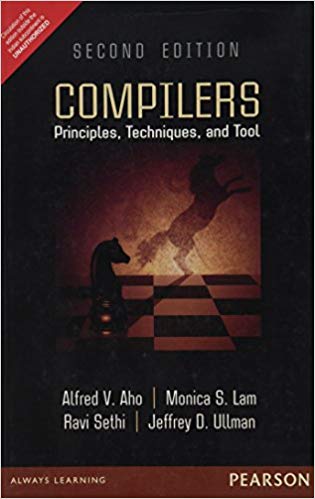
Book details
- Author: Alfred Aho, Monica Lam, Ravi Sethi, Ullman
- Publisher: Pearson
- Format: Paperback
- Edition: 2nd
 Kashmiri Guide I 2nd Semester (Bhat 7366)P-86
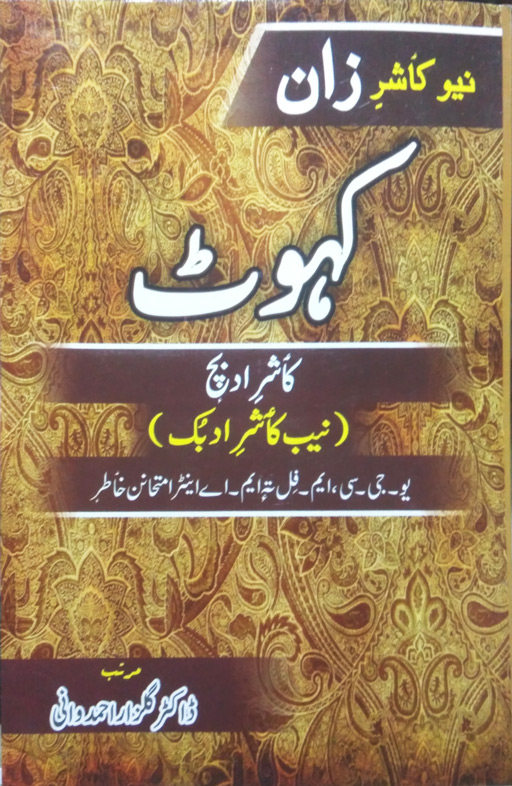 New Kashir Zaan Khavat

₹585.00 Original price was: ₹585.00.₹530.00Current price is: ₹530.00.9% off
11 in stock
Compilers: Principles, Techniques and Tools, known to students everywhere as the Dragon Book, is the classic textbook on compilers and compiler design. Written by Alfred V. Aho, Monica S. Lam, Ravi Sethi and Jeffrey D. Ullman, this second edition explains how a program written in a high level language is turned into efficient machine code. Please message us on WhatsApp at 9906523492 for details of the copy in stock, including the printing year and number of pages.
Few people will ever build a full production compiler, but the ideas inside this book are used everywhere: in text processing, query languages, configuration tools, code analysis and the design of programming languages. That is why the Dragon Book has stayed on reading lists for so many years.
Alfred Aho and Jeffrey Ullman are known for their influential work in computer science at Columbia and Stanford universities, Monica Lam teaches at Stanford, and Ravi Sethi has worked in industry research. Together they updated the book so that it reflects modern software engineering, programming languages and computer architecture.
According to the publisher, the second edition is organised into twelve chapters plus appendices:
Appendices present a complete front end and a method for finding linearly independent solutions. The publisher highlights the three newer chapters on parallelism, locality and interprocedural analysis as additions to this edition.
A compiler course brings together many branches of computer science: formal languages, data structures, algorithms and computer architecture. By working through the stages of lexical analysis, parsing, translation and code generation, a student sees how theory becomes a working tool. Readers also become better programmers, because they understand what the compiler does with their code and why some constructions run faster than others.
We do not claim that this book follows any particular university syllabus, so check your course outline and use the book as your main reference.
Start with the first two chapters to see the whole pipeline, then go deeper into lexical analysis and parsing, which are the usual core of a first course. Practise constructing finite automata and parsing tables by hand. Build a tiny translator for arithmetic expressions as a project, since writing code fixes the concepts in memory. Leave the later chapters on parallelism and interprocedural analysis for a second reading or an advanced course.
Authors: Alfred V. Aho, Monica S. Lam, Ravi Sethi and Jeffrey D. Ullman. Publisher: Pearson. Edition: 2nd edition, paperback. For the printing year, pages and other details of the copy in stock, please message us on WhatsApp at 9906523492. Same-day dispatch from Srinagar. Delivery takes about 1 day in Srinagar and 3 to 10 days across the rest of India.
Why is it called the Dragon Book? The book is widely known by that nickname among students and teachers of computer science.
Who are the authors? Alfred V. Aho, Monica S. Lam, Ravi Sethi and Jeffrey D. Ullman.
Is this the second edition? Yes, it is the 2nd edition in paperback.
How quickly will it reach me? We dispatch the same day from Srinagar. Delivery is about 1 day in Srinagar and 3 to 10 days across India.
Looking for more college books like this? Browse all Higher Education books. Follow Lafz Bookstore on Instagram for new arrivals and book recommendations.
Only logged in customers who have purchased this product may leave a review.
Orders are dispatched the same day.
Prepaid orders get 5% off with coupon code PREPAID. For Cash on Delivery, please message us on WhatsApp (99065 23492).
Shipping charges, if any, are shown at checkout. If an item becomes unavailable after you order, we will let you know and refund it the way you paid.
Full details: Delivery Policy · Refund Policy
Compilers: Principles, Techniques and Tools, known to students everywhere as the Dragon Book, is the classic textbook on compilers and compiler design. Written by Alfred V. Aho, Monica S. Lam, Ravi Sethi and Jeffrey D. Ullman, this second edition explains how a program written in a high level language is turned into efficient machine code. Please message us on WhatsApp at 9906523492 for details of the copy in stock, including the printing year and number of pages.
Few people will ever build a full production compiler, but the ideas inside this book are used everywhere: in text processing, query languages, configuration tools, code analysis and the design of programming languages. That is why the Dragon Book has stayed on reading lists for so many years.
Alfred Aho and Jeffrey Ullman are known for their influential work in computer science at Columbia and Stanford universities, Monica Lam teaches at Stanford, and Ravi Sethi has worked in industry research. Together they updated the book so that it reflects modern software engineering, programming languages and computer architecture.
According to the publisher, the second edition is organised into twelve chapters plus appendices:
Appendices present a complete front end and a method for finding linearly independent solutions. The publisher highlights the three newer chapters on parallelism, locality and interprocedural analysis as additions to this edition.
A compiler course brings together many branches of computer science: formal languages, data structures, algorithms and computer architecture. By working through the stages of lexical analysis, parsing, translation and code generation, a student sees how theory becomes a working tool. Readers also become better programmers, because they understand what the compiler does with their code and why some constructions run faster than others.
We do not claim that this book follows any particular university syllabus, so check your course outline and use the book as your main reference.
Start with the first two chapters to see the whole pipeline, then go deeper into lexical analysis and parsing, which are the usual core of a first course. Practise constructing finite automata and parsing tables by hand. Build a tiny translator for arithmetic expressions as a project, since writing code fixes the concepts in memory. Leave the later chapters on parallelism and interprocedural analysis for a second reading or an advanced course.
Authors: Alfred V. Aho, Monica S. Lam, Ravi Sethi and Jeffrey D. Ullman. Publisher: Pearson. Edition: 2nd edition, paperback. For the printing year, pages and other details of the copy in stock, please message us on WhatsApp at 9906523492. Same-day dispatch from Srinagar. Delivery takes about 1 day in Srinagar and 3 to 10 days across the rest of India.
Why is it called the Dragon Book? The book is widely known by that nickname among students and teachers of computer science.
Who are the authors? Alfred V. Aho, Monica S. Lam, Ravi Sethi and Jeffrey D. Ullman.
Is this the second edition? Yes, it is the 2nd edition in paperback.
How quickly will it reach me? We dispatch the same day from Srinagar. Delivery is about 1 day in Srinagar and 3 to 10 days across India.
Looking for more college books like this? Browse all Higher Education books. Follow Lafz Bookstore on Instagram for new arrivals and book recommendations.
There are no reviews yet.
Only logged in customers who have purchased this product may leave a review.
Orders are dispatched the same day.
Prepaid orders get 5% off with coupon code PREPAID. For Cash on Delivery, please message us on WhatsApp (99065 23492).
Shipping charges, if any, are shown at checkout. If an item becomes unavailable after you order, we will let you know and refund it the way you paid.
Full details: Delivery Policy · Refund Policy
No account yet?
Create an Account11 in stock
Tell us the name and we’ll hunt it down for you. We reply instantly on WhatsApp.
Ask on WhatsAppOpens WhatsApp with your message ready. Just hit send.
WhatsApp us



Reviews
There are no reviews yet.